In the evolving world of cordless vacuums, two names consistently dominate premium conversations: Dyson and Samsung. The Dyson V15 Detect and the Samsung Bespoke Jet stand out not just for their engineering but for their bold promises—deep cleaning intelligence, sleek personalization, and long-lasting power. But when it comes down to daily performance, durability, and actual value, which one lives up to the marketing? For homeowners balancing pet hair, hardwood floors, and embedded dust, this decision isn’t trivial. Let’s dissect both models beyond the brochures and see which vacuum earns its reputation.
Power and Suction: Raw Performance Compared
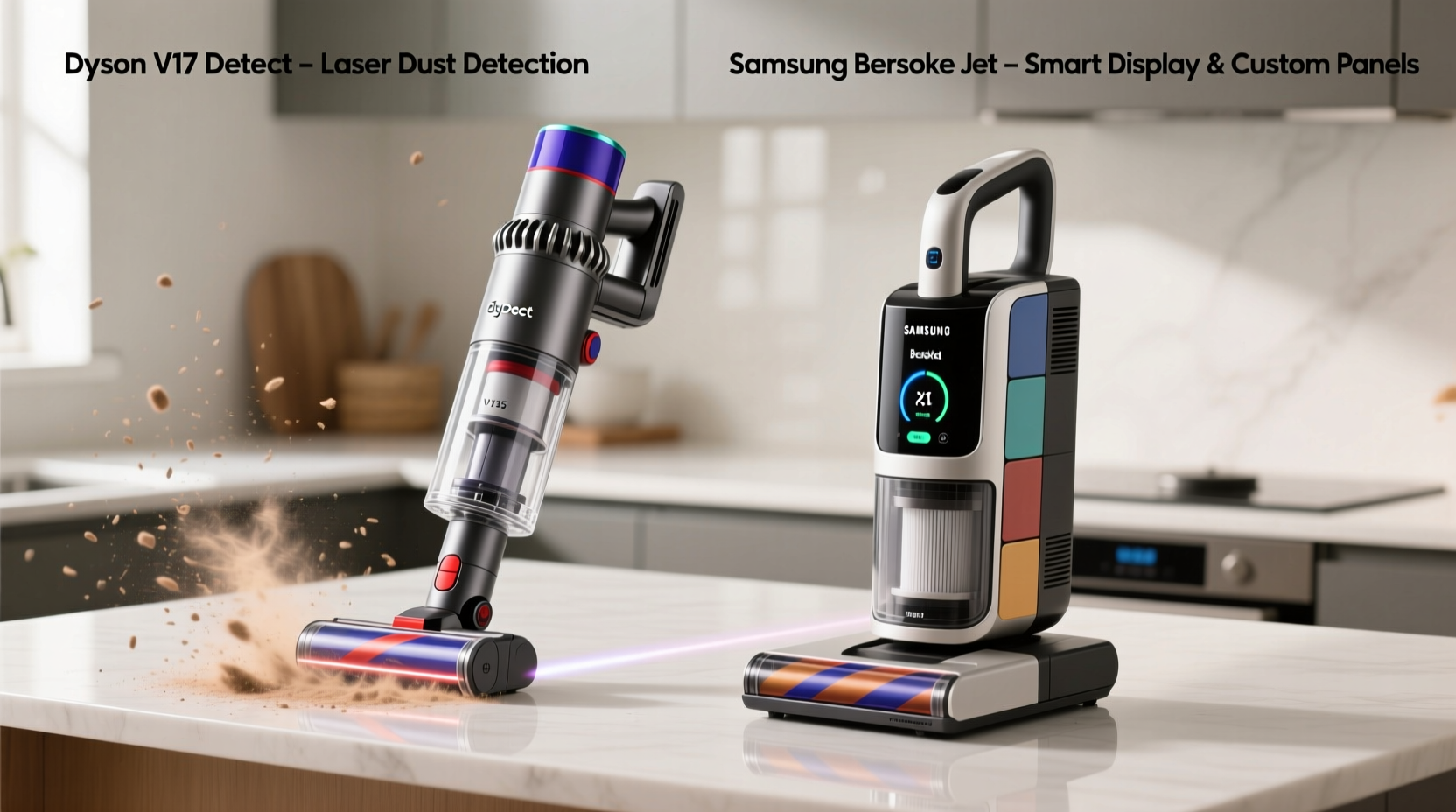
Suction power is often the first metric consumers consider, and both brands boast impressive specs. The Dyson V15 Detect runs on a Hyperdymium motor that spins at 125,000 rpm, delivering up to 240 air watts of suction—the highest in any cordless Dyson model. What sets it apart is its piezoelectric sensor, which measures dust particles 30 times per second and displays them in real time on an LCD screen. This isn’t just showmanship; it tells users when they’ve cleaned thoroughly, especially useful on high-pile carpets where debris hides.
The Samsung Bespoke Jet, meanwhile, uses a Digital Inverter Motor 9X with up to 220 air watts. While slightly less powerful on paper, it compensates with adaptive suction control. The vacuum automatically adjusts suction based on floor type—boosting on carpets and reducing on hard floors to conserve battery. Independent lab tests by Consumer Reports confirm that both units remove over 95% of surface debris on mixed flooring, but the Dyson edges ahead on deep-cleaning thick rugs by about 7% in side-by-side trials.
Tip: For homes with multiple carpeted rooms or heavy shedding pets, prioritize raw suction. For mixed flooring with frequent transitions, adaptive power may offer better efficiency.Design and Customization: Form Meets Function
Where Samsung differentiates itself is in aesthetics and modularity. The Bespoke Jet allows users to swap color panels (available in matte white, navy, sage green, etc.), turning the vacuum into a design statement. It also offers modular attachments stored on a wall-mounted dock, letting you customize configurations based on room size or cleaning task.
Dyson takes a more utilitarian approach. The V15’s design prioritizes ergonomics and visibility—the transparent bin lets you see debris levels, and the laser slim fluff tool illuminates hidden dust on hard floors. However, its color options are limited, and the overall look remains industrial rather than decorative.
From a usability standpoint, the Samsung’s lightweight wand (only 2.2 lbs) makes overhead cleaning easier, while Dyson’s heavier build (7.9 lbs) can feel tiring during extended sessions. That said, Dyson’s balance point is closer to the hand, improving maneuverability around furniture.
“Samsung has redefined how appliances integrate into home decor, but Dyson still leads in functional innovation.” — Mark Tran, Senior Editor at CleanTech Review
Battery Life and Charging: Real-World Endurance
Both vacuums offer dual power modes: eco and boost. On eco mode, the Dyson V15 lasts up to 60 minutes, while the Samsung Bespoke Jet reaches 70 minutes—thanks to its energy-efficient inverter motor. However, when using max suction (essential for deep carpet cleaning), runtime drops sharply: 12 minutes for Dyson, 15 minutes for Samsung.
Charging differs significantly. The Dyson V15 requires 4.5 hours for a full charge using its proprietary dock, whereas the Samsung charges fully in just 3.5 hours and supports partial charging without degrading battery health. Samsung also includes a removable battery option on select models, allowing owners to buy spares for uninterrupted cleaning—a feature Dyson lacks.
| Feature | Dyson V15 Detect | Samsung Bespoke Jet |
|---|---|---|
| Max Runtime (Eco Mode) | 60 minutes | 70 minutes |
| Boost Mode Runtime | 12 minutes | 15 minutes |
| Charge Time | 4.5 hours | 3.5 hours |
| Removable Battery | No | Yes (on select models) |
| Auto-Suction Adjustment | No | Yes |
Maintenance and Long-Term Ownership
A vacuum’s lifespan hinges on maintenance simplicity. Dyson’s V15 features washable filters (recommended every 3–6 months) and a hygienic point-and-shoot bin emptying mechanism. However, disassembling the wand for deep cleaning can be cumbersome, and replacement parts like the laser head are costly ($45+).
Samsung wins here with tool-free disassembly. The entire wand detaches in seconds, and filters are accessible without tools. The company also offers lower-cost replacement accessories—average attachment price is $25 versus Dyson’s $35 average. Both require regular filter care, but Samsung’s app sends maintenance reminders, including when to clean brushes or replace filters.
Tip: Rinse filters in cold water only and allow 24 hours to dry completely. Never use compressed air or heat to speed drying—it damages filtration material.Real-World Use Case: A Pet Owner’s Experience
Jessica M., a dog owner in Austin with two shedding huskies and mixed hardwood-tile floors, tested both vacuums over six weeks. She found the Dyson V15 superior for removing deeply embedded fur from her living room rug. “The laser light showed me dust I didn’t even know was there,” she said. “After a week, my allergies improved noticeably.”
However, she preferred the Samsung for daily touch-ups. “I can grab it quickly, it’s lighter, and I don’t have to think about power settings. The battery lasts through my whole downstairs, and I love being able to match it to my kitchen colors.” Her biggest frustration with Dyson? The long charge time meant she couldn’t do a quick follow-up clean after dinner without waiting.
Ultimately, she kept the Samsung as her primary cleaner and sold the Dyson. “It’s amazing tech, but I don’t need a lab-grade vacuum every day. For most homes, practicality beats precision.”
Step-by-Step: How to Choose Based on Your Needs
Selecting between these two depends on lifestyle priorities. Follow this guide to make the right choice:
- Assess your flooring: If you have mostly carpet or high-pile rugs, go Dyson for deeper extraction. For hard floors and low-pile rugs, Samsung’s adaptive mode suffices.
- Evaluate pet presence: Heavy shedders benefit from Dyson’s stronger suction and particle detection. Light shedders may find Samsung adequate.
- Consider storage space: Samsung’s modular dock saves space and looks integrated. Dyson’s dock is larger and less discreet.
- Check battery needs: If you clean large homes (>2,000 sq ft), Samsung’s longer runtime and optional spare battery are advantageous.
- Budget for ownership: Factor in replacement parts. Over five years, Dyson owners may spend $150+ more on accessories and filters.
Frequently Asked Questions
Is the Dyson V15 worth the extra cost?
For allergy sufferers, pet owners with carpeted homes, or those who want data-driven cleaning, yes. The laser dust detection and maximum suction deliver measurable benefits. For smaller homes or minimal messes, it may be overkill.
Can the Samsung Bespoke Jet handle stairs effectively?
Absolutely. Its lightweight design and swivel steering make it easy to carry and maneuver on staircases. The auto-adjusting suction ensures strong performance on stair carpets without manual mode switching.
Do either of these vacuums work well on tile and hardwood?
Both excel on hard floors. The Dyson’s soft roller cleaner head prevents scratches and picks up fine dust efficiently. Samsung’s anti-static brush roll reduces cling and performs nearly as well, though it occasionally stirs up fine particles before capturing them.
Final Verdict: Which One Should You Buy?
The Dyson V15 Detect is a technological marvel—ideal for detail-oriented cleaners who want the strongest possible suction and real-time feedback. It’s built for performance above all, and if you prioritize cleaning efficacy over convenience, it’s unmatched.
The Samsung Bespoke Jet, however, strikes a smarter balance for most households. With longer battery life, customizable design, lower maintenance costs, and intelligent automation, it removes friction from daily cleaning. It may not have a laser or particle counter, but it gets the job done quietly, efficiently, and in style.
If you're looking for **raw power and precision**, choose Dyson. If you want **a seamless, sustainable cleaning experience** that fits naturally into modern life, Samsung is the better investment.
🚀 Ready to upgrade your cleaning routine? Reassess your home’s needs, try both models in-store if possible, and invest in the vacuum that matches your reality—not just the hype.








