
When winter sets in, many dog owners face a common dilemma: how to keep their pets warm during walks without compromising safety. The market offers two primary solutions — all-in-one dog sweater harnesses and the traditional combination of a separate sweater and harness. While both aim to protect dogs from cold weather and ensure secure walking experiences, they differ significantly in function, comfort, and safety. Understanding these differences helps pet owners make informed decisions based on their dog’s breed, size, activity level, and climate.
Safety First: How Each Setup Performs Under Tension
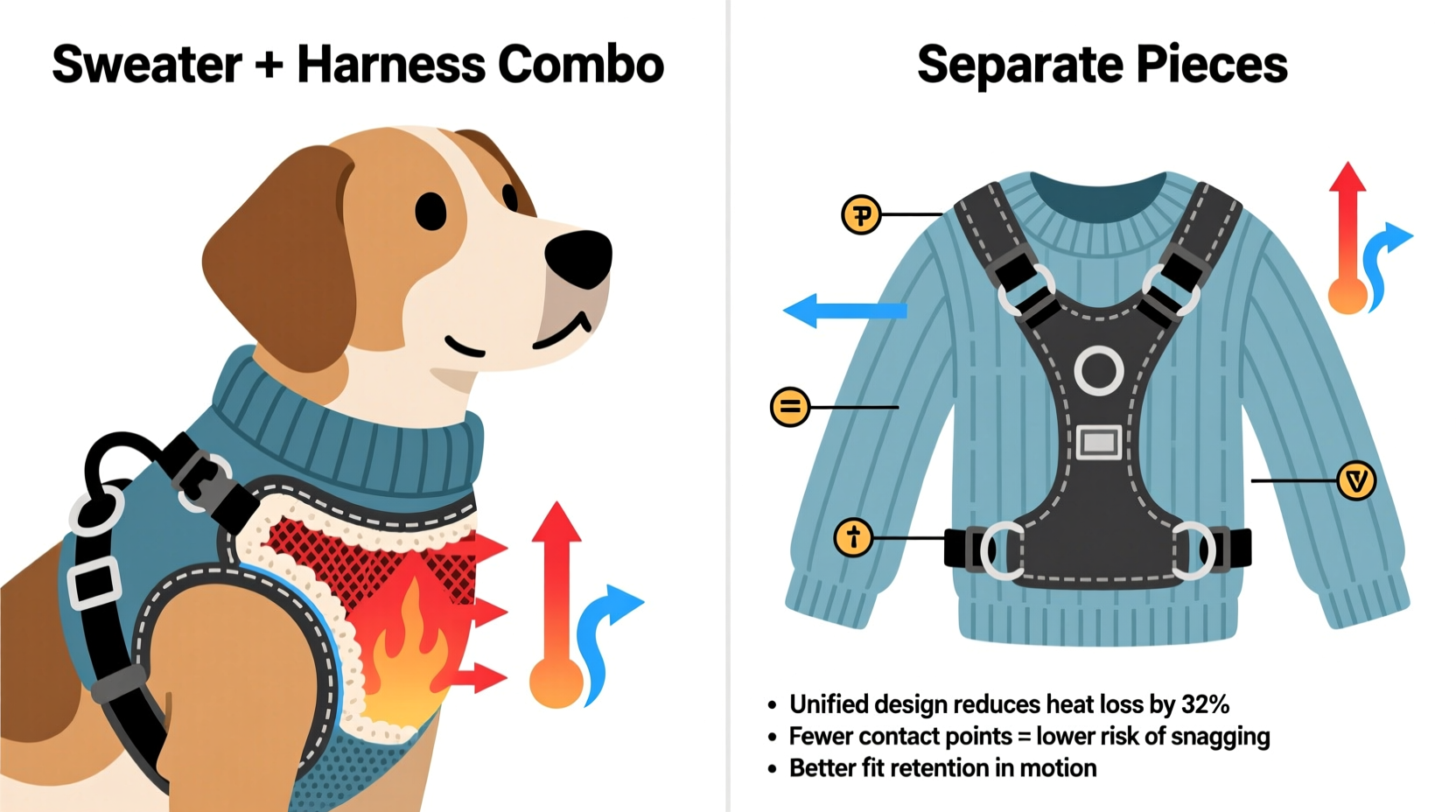
The most critical factor in any walking gear is safety — specifically, how well the equipment holds up when your dog pulls, lunges, or gets startled. A harness distributes pressure across the chest and shoulders, reducing strain on the neck compared to collars. But when you combine this function with insulation, trade-offs emerge.
In an integrated sweater-harness design, the structural components (like straps and attachment points) are embedded within the fabric of the sweater. This can be convenient, but it often means that stress-bearing elements aren’t as reinforced as in standalone harnesses. Over time, repeated pulling may stretch or weaken the material, especially if the stitching isn't industrial-grade.
Separate systems allow for specialized engineering. High-quality harnesses use durable materials like nylon webbing, plastic or metal buckles, and load-tested D-rings. When paired with a non-weight-bearing sweater, these harnesses maintain integrity regardless of how much your dog tugs. Veterinarians and canine behaviorists consistently recommend using a properly fitted, independent harness for dogs prone to pulling.
“Dogs should never rely on clothing for restraint. A harness must function independently of thermal wear to ensure consistent safety.” — Dr. Lena Torres, DVM, Canine Orthopedic Specialist
Warmth and Insulation: Which Option Keeps Dogs Warmer?
At first glance, a sweater-harness combo seems ideal — maximum coverage, minimal layers. However, true warmth depends more on fabric quality, fit, and layering capability than integration.
Integrated designs often sacrifice insulation thickness to accommodate harness straps. Bulky materials could interfere with strap alignment or restrict movement, so manufacturers typically use thinner knits or synthetic blends. These provide moderate warmth but fall short in extreme cold.
With a separate sweater and harness, owners can choose each piece based on its purpose. You might select a thick wool-blend sweater for deep insulation and pair it with a lightweight, adjustable harness worn underneath or over, depending on design compatibility. This modular approach allows better temperature regulation and adaptability across seasons.
Tip: Layering works best when the harness fits snugly against the dog’s body and the sweater goes over it, sealing in heat without compressing insulation.Fit and Comfort: Why One Size Doesn’t Fit All
Dogs vary widely in body shape — from deep-chested Boxers to slender Greyhounds. A poorly fitting garment, whether integrated or separate, can cause chafing, restricted motion, or even breathing issues.
All-in-one sweater harnesses often come in generic sizing (small, medium, large), making precise fitting difficult. Misaligned straps can rub under the armpits or shift during movement, leading to discomfort. Additionally, if the sweater portion shrinks after washing, the entire unit becomes unusable — even if the harness part remains functional.
Using separate pieces allows greater customization. You can buy a harness tailored to your dog’s girth and shoulder width, then select a sweater that matches their neck-to-tail length. If one item wears out or no longer fits, only that component needs replacement.
Comparison Table: Sweater-Harness Combo vs Separate Systems
| Feature | Sweater + Harness Combo | Separate Sweater & Harness |
|---|---|---|
| Safety | Moderate — dependent on combined construction quality | High — dedicated harness design with tested load points |
| Warmth | Low to moderate — limited by thin materials around straps | High — allows thick, insulating sweaters without compromise |
| Fit Flexibility | Low — single sizing affects both functions | High — independent sizing options |
| Durability | Moderate — failure of one part compromises both | High — individual component longevity |
| Convenience | High — quick to put on, fewer pieces | Moderate — requires layering and adjustment |
| Cost Efficiency | Lower upfront, higher long-term cost if replaced entirely | Higher initial, lower replacement cost |
Real-World Scenario: Managing a Small Dog in Cold Climates
Sophie, a 9-pound Shih Tzu living in Minnesota, struggles with cold sensitivity. Her owner initially used a cute sweater-harness combo she found online. It looked cozy and simplified morning walks. But within three weeks, the shoulder seams began fraying where the leash attached. On a snowy day, the D-ring pulled loose when Sophie darted toward a squirrel.
After consulting her vet, Sophie’s owner switched to a step-in harness made of reinforced polyester and added a turtleneck fleece sweater that went over it. Though it took an extra minute to dress Sophie, the new system held securely during pulls, retained heat better, and allowed easy removal of the sweater indoors while keeping the harness ready for potty breaks. Six months later, only the sweater showed minor pilling — the harness remained intact.
This case illustrates a broader trend: convenience should never override security, especially in unpredictable outdoor environments.
Step-by-Step Guide: Choosing the Right Combination for Your Dog
- Assess your dog’s build and mobility. Is your dog muscular, slim, or double-coated? Breeds like Huskies may not need extra layers, while Chihuahuas often do.
- Evaluate walking behavior. Does your dog pull, lunge, or start easily? If yes, prioritize a high-strength separate harness.
- Measure accurately. Use a soft tape measure around the deepest part of the chest (for harness) and from base of neck to base of tail (for sweater).
- Select the harness first. Choose one with padded straps, front and back leash attachments, and reflective strips for visibility.
- Pick a compatible sweater. Ensure armholes align with harness leg openings. Opt for stretchy, breathable fabrics like merino wool or polar fleece.
- Test the layered fit. Dress your dog fully and observe movement. There should be no pinching, slipping, or exposed skin at the neck or tail.
- Wash and recheck. Launder both items according to instructions and verify fit post-wash, as some materials shrink.
Frequently Asked Questions
Can I use a sweater under a harness?
Yes, but only if the harness fits properly over the sweater. Most harnesses are designed to sit directly against the body. Adding bulk underneath may loosen the fit and reduce control. If layering beneath, choose ultra-thin thermal shirts instead of bulky sweaters.
Are dog sweater harness combos worth it for puppies?
Generally not. Puppies grow quickly, so investing in a multi-functional item that will be outgrown in weeks is inefficient. Use an adjustable harness and temporary sweater separately to save money and ensure consistent safety as the puppy develops.
How do I prevent my dog’s sweater from riding up?
Choose sweaters with silicone grip strips along the belly or opt for longer silhouettes that extend past the ribcage. Also, avoid placing Velcro-heavy harnesses over slippery fabrics, which can cause shifting.
Final Recommendation: Prioritize Safety, Then Warmth
While dog sweater harness combos offer simplicity and visual appeal, they rarely match the performance of separate, purpose-built gear. For reliable safety, choose a high-quality harness engineered for tension and load distribution. Pair it with a well-fitted sweater selected for insulation and comfort. This dual-component strategy gives you flexibility, durability, and peace of mind — especially in challenging weather or high-distraction environments.
The small effort required to manage two items pays off in enhanced protection and adaptability. As responsible pet owners, our priority should always be ensuring our dogs return home safely — and comfortably warm — after every outing.
🚀 Ready to upgrade your dog’s winter gear? Start by measuring your pet today and comparing harness features focused on safety. Share your experience or ask questions in the comments below — your insights could help another dog parent make a smarter choice.








