Traveling with your dog can be one of life’s greatest joys—whether it's a scenic road trip or a routine visit to the vet. But when it comes to long drives, safety becomes non-negotiable. Unrestrained dogs are not only at risk during sudden stops or accidents, but they can also become a serious distraction or even a projectile hazard in a collision. This raises an important question: should you use a dog car seat or a harness for long-distance travel?
The answer isn’t as simple as picking one over the other. Each option has distinct advantages and limitations depending on your dog’s size, temperament, vehicle type, and journey duration. To make an informed decision, it’s essential to understand how each system works, what safety standards apply, and what real-world conditions demand.
Understanding the Risks of Unrestrained Dogs in Vehicles
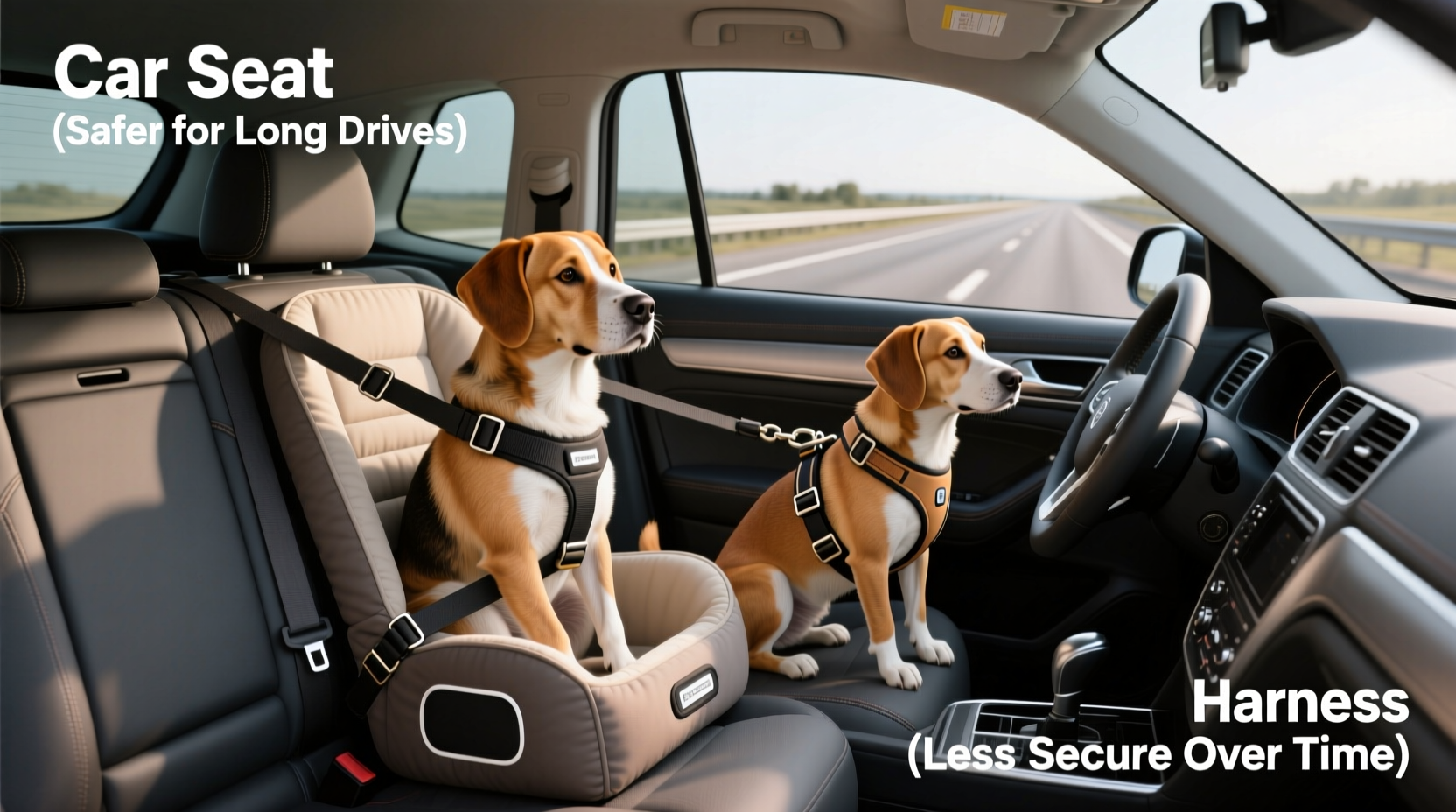
Before comparing car seats and harnesses, it's critical to acknowledge why restraint systems matter. The Insurance Institute for Highway Safety (IIHS) reports that unrestrained pets significantly increase crash risks—not just for themselves, but for human passengers too. In a 30 mph collision, a 50-pound dog can exert over 1,500 pounds of force if thrown forward. That kind of impact can cause fatal injuries.
Beyond safety, unrestrained dogs impair driver focus. A study from the Center for Veterinary Medicine found that drivers distracted by pets were twice as likely to miss traffic signals or swerve unintentionally. Long drives amplify these risks due to fatigue, changing weather, and unpredictable road conditions.
This is where dedicated canine restraints come in. Both dog car seats and harnesses aim to secure your pet safely, but they do so in fundamentally different ways.
How Dog Car Seats Work: Benefits and Limitations
Dog car seats are elevated platforms—often resembling booster seats—that strap into your vehicle’s existing seat belt system. They’re typically designed for small to medium-sized dogs (under 30 pounds) and are ideal for owners who want their pet to see out the window while remaining securely positioned.
These seats usually feature built-in harness tethers, allowing the dog to be clipped directly into the seat itself. This dual-layer security prevents both ejection and excessive movement within the cabin.
Tip: Always ensure the car seat is compatible with your vehicle model—some larger backseats may restrict installation or reduce stability.Advantages of Dog Car Seats:
- Elevated visibility: Reduces motion sickness by letting dogs see outside.
- Added comfort: Padded interiors mimic familiar sleeping spaces.
- Containment: Prevents dogs from climbing into footwells or distracting the driver.
- Crash-tested models available: Some brands like Sleepypod and Kurgo offer seats tested under federal crash standards.
Limitations:
- Size constraints—unsuitable for large breeds.
- Installation complexity—requires correct seat belt routing.
- Can shift during sharp turns if not properly anchored.
- Limited ventilation in some models, leading to overheating on long trips.
“Car seats provide excellent protection for small dogs when used correctly. However, fit and installation are everything.” — Dr. Sarah Thompson, DVM, Veterinary Safety Researcher
Dog Harnesses: Security and Flexibility on the Road
Dog harnesses designed for car use differ from walking harnesses. These are specifically engineered to distribute crash forces across the chest and shoulders rather than the neck, reducing injury risk. They attach directly to the vehicle’s seat belt latch, functioning much like a human seat belt.
Unlike standard harnesses, automotive-grade versions undergo rigorous testing. Look for labels indicating compliance with the Center for Pet Safety (CPS) standards—a nonprofit organization that conducts independent crash tests on pet products.
These harnesses work well for dogs of all sizes, especially larger breeds that wouldn’t fit in most car seats. Because they allow more freedom of movement while still providing restraint, many dogs find them less confining.
What Makes a Harness “Crash-Safe”?
Not all harnesses sold as “car-safe” meet actual safety benchmarks. True crash-tested harnesses must pass dynamic sled tests simulating a 30–35 mph frontal collision. Key features include:
- High-tensile webbing resistant to stretching
- Reinforced stitching at stress points
- Proper attachment point aligned with the vehicle’s seat belt geometry
- Load-limiting components to reduce peak force on the dog’s body
Popular CPS-certified options include the Sleepypod ClickIt Utility and the Ruffwear Load Up harness, both proven effective in controlled crash simulations.
Direct Comparison: Car Seat vs Harness
| Feature | Dog Car Seat | Dog Harness |
|---|---|---|
| Ideal For | Small to medium dogs (under 30 lbs) | All sizes, especially medium to large breeds |
| Safety Certification | Some models CPS-tested (e.g., Sleepypod Auto) | Several CPS-certified options available |
| Mobility Restriction | High—dog remains in seat | Moderate—allows slight movement while restrained |
| Comfort on Long Drives | Good, with padding and elevation | Varies; depends on harness fit and breathability |
| Ventilation | Can be limited in enclosed models | Generally better airflow |
| Installation Complexity | Moderate to high (belt routing + base stability) | Low to moderate (clip into seat belt) |
| Durability Over Time | Frame integrity may degrade with frequent use | Webbing lasts longer with proper care |
Real-World Example: A Cross-Country Trip with Two Dogs
Consider Mark and Lisa, who drove from Denver to Portland with their two dogs: a 12-pound Cavalier King Charles Spaniel and a 65-pound Australian Shepherd. For the spaniel, they used a CPS-tested car seat with a tether, placing it behind the front passenger seat. The elevated design kept her calm and allowed her to observe passing scenery, which helped prevent anxiety-induced barking.
For the larger Aussie, a car seat wasn’t feasible. Instead, they chose a crash-tested harness connected to the rear seat belt. They made sure the harness fit snugly without restricting breathing and adjusted the seat belt length to minimize slack.
Over six days of driving, both dogs remained secure. During a sudden braking incident on I-84, the harness held firm, and the car seat didn’t tip. Post-trip inspections showed no damage to either device. Their experience highlights how pairing the right restraint with the dog’s size and behavior leads to safer, more comfortable journeys.
Step-by-Step Guide: Choosing and Installing the Right System
Selecting between a car seat and harness requires careful evaluation. Follow this timeline to ensure optimal safety before your next long drive:
- Assess your dog’s size and breed: Under 30 lbs? A car seat might work. Over 40 lbs? Lean toward a harness.
- Check product certifications: Look for CPS certification or independent crash-test results. Avoid untested “travel” harnesses.
- Measure your vehicle’s backseat: Ensure the car seat fits without blocking airbags or impeding access.
- Try a short test drive: Observe how your dog reacts—does the harness rub? Does the seat wobble?
- Inspect regularly: Before every long trip, check for frayed straps, broken buckles, or worn padding.
- Practice emergency exits: Know how quickly you can release your dog in case of an accident or evacuation need.
Frequently Asked Questions
Can I use a regular dog harness in the car?
No. Standard walking harnesses are not designed to withstand crash forces and may fail catastrophically in a collision. Only use harnesses explicitly labeled as crash-tested or certified by the Center for Pet Safety.
Are dog car seats safe for SUVs or trucks?
Yes, but only if installed correctly. In vehicles with bucket seats or low backs, some car seats may lack adequate support. Use models with additional anti-slip pads or secondary anchors to improve stability.
Which is better for preventing motion sickness—car seat or harness?
Car seats often help more because they elevate small dogs, giving them a view of the horizon. Visual reference reduces inner ear confusion, a common cause of nausea. However, proper ventilation and frequent breaks are equally important regardless of restraint type.
Final Verdict: Which Is Safer for Long Drives?
When it comes to pure safety metrics, **a crash-tested harness generally offers superior protection**, especially for medium to large dogs. Independent tests show that top-rated harnesses maintain structural integrity and limit forward displacement effectively—even in high-speed impacts. Car seats, while beneficial for small breeds, rely heavily on proper installation and vehicle compatibility, introducing more variables that could compromise safety.
That said, the safest choice is the one that fits your dog perfectly, meets recognized safety standards, and is used consistently. A poorly fitted harness is less safe than a well-installed car seat, and vice versa.
For long drives, prioritize crash certification over convenience. Comfort matters, but never at the expense of verified safety performance. Whether you choose a seat or harness, ensure it’s designed for actual collision protection—not just marketing appeal.
Take Action Today for a Safer Ride Tomorrow
Your dog trusts you with their life every time they hop into the car. Don’t let outdated assumptions or untested gear put that trust at risk. Review your current setup. If it lacks CPS certification or shows signs of wear, replace it now. Schedule a trial run on a local drive to assess fit and comfort. Share what you’ve learned with fellow pet owners—because safer pets mean safer roads for everyone.
💬 Have experience with dog car seats or harnesses on long trips? Share your story or tips in the comments to help others make smarter, safer choices.








