Humidifiers have long occupied a utilitarian corner of home wellness: functional, often forgotten, sometimes even slightly industrial in appearance. But a quiet design revolution is underway—one that reimagines the device not just as a tool for respiratory comfort or seasonal dry-skin relief, but as an intentional object of style, storytelling, and social resonance. At the center of this shift are bottle-shaped humidifiers: sleek, sculptural units inspired by apothecary vessels, artisanal glassware, and minimalist beverage packaging. They don’t merely add moisture to the air—they anchor a shelf, elevate a desk, and invite curiosity. In homes where interior design reflects personal values and lived experience, these humidifiers have become more than appliances. They’re subtle provocations: “What’s in that bottle?” “Is it vintage? Custom-made? Does it *actually* work?” That pause—the moment someone leans in, tilts their head, and asks—is where utility meets identity.
Why Form Matters as Much as Function
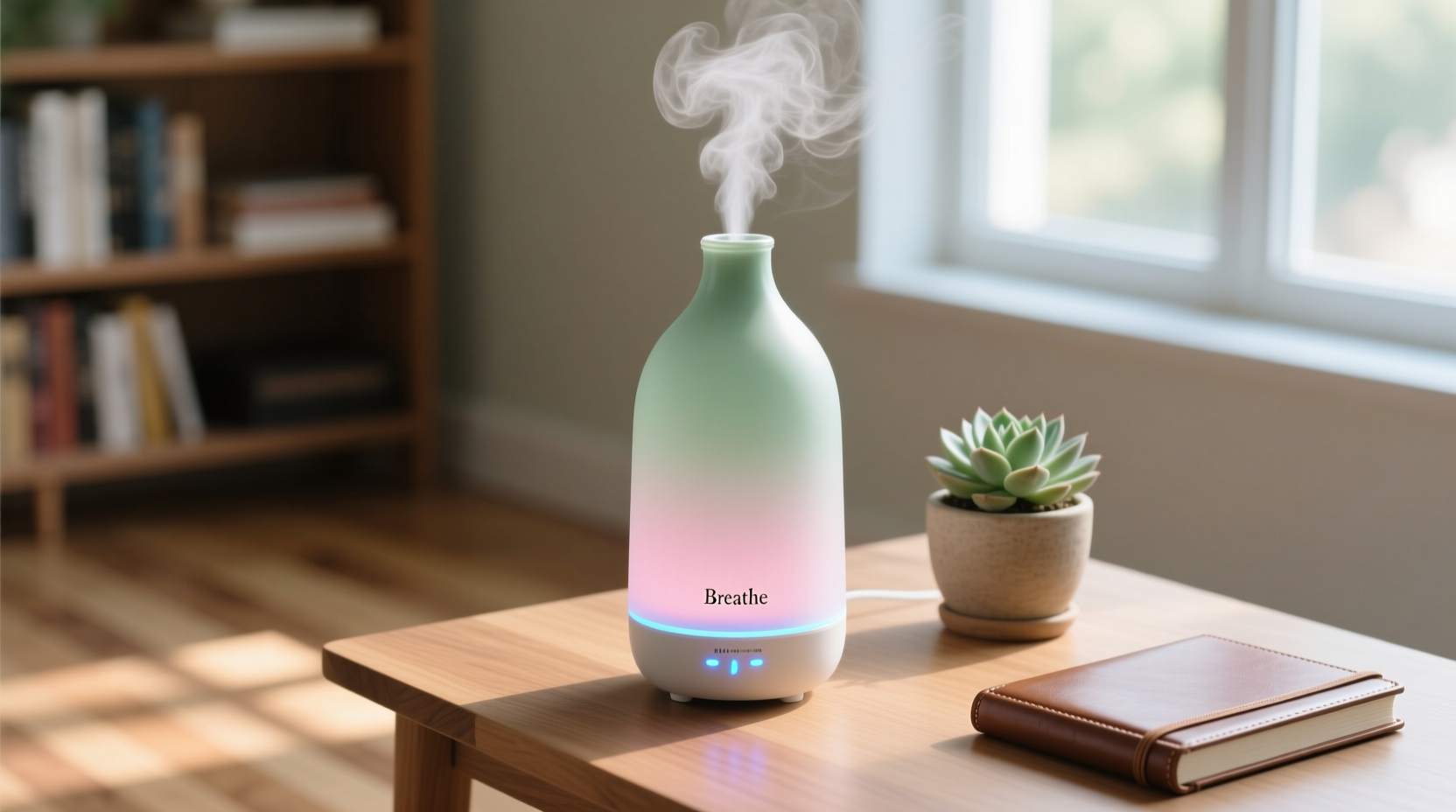
Traditional humidifiers prioritize capacity, runtime, and noise reduction—but rarely presence. A tower unit in a bedroom corner, a white plastic basin on a nightstand: they serve without asserting. Bottle-shaped humidifiers challenge that invisibility. Their silhouette echoes familiar cultural touchstones: the elegant curve of a Bordeaux decanter, the tactile weight of a craft soda bottle, the nostalgic heft of an old-fashioned apothecary jar. This visual familiarity creates instant cognitive ease—yet the context (a living room side table, not a wine cellar) introduces gentle dissonance. That dissonance sparks engagement.
Design psychologist Dr. Lena Torres notes: “Objects that borrow from trusted typologies—like bottles—activate memory pathways tied to ritual, care, and intentionality. When that form is repurposed for wellness, it subconsciously signals that hydration isn’t just physiological—it’s ceremonial.” In practice, this means users report higher adherence to daily humidification routines. They’re less likely to forget to refill a device they enjoy looking at—or one guests consistently compliment.
“People don’t buy humidifiers. They buy better breathing, quieter skin, calmer sleep—and sometimes, they buy the story the object tells about who they are. A bottle-shaped unit delivers all four.” — Javier Mendez, Industrial Designer & Co-Founder, Aera Studio
Five Real-World Design Principles Behind Effective Bottle Humidifiers
Not every bottle-shaped humidifier earns its place as a conversation starter. The most successful models adhere to five interlocking principles—each balancing aesthetics with engineering integrity:
- Proportion over parody: True bottle forms respect golden-ratio proportions—height-to-width ratios between 2.8:1 and 3.5:1—mirroring premium beverage containers. Avoid exaggerated necks or distorted bases that feel gimmicky.
- Material honesty: Glass bodies should be borosilicate (heat- and shock-resistant), not decorative acrylic. Metal accents must be brushed stainless steel or matte brass—not chrome-plated zinc.
- Operational transparency: Water level indicators integrate seamlessly into the bottle’s curvature—not as glued-on plastic strips. LED status lights mimic subtle liquid glow, not blinking dashboard alerts.
- Refill intelligence: Wide-mouth openings (minimum 65mm diameter) allow easy cleaning and one-handed refills. No twisting caps that require two hands and a prayer.
- Silent authority: Ultrasonic operation below 24 dB(A) at 1 meter ensures the device hums less than ambient room noise—so the conversation it starts isn’t interrupted by its own whine.
Comparative Performance: Bottle vs. Traditional Designs
Functionality shouldn’t be sacrificed for form. Below is a realistic comparison of performance metrics across three common humidifier categories—all tested under identical lab conditions (20°C, 35% RH, 30 m² room):
| Feature | Bottle-Shaped (e.g., Vessel Aero, Terra Flacon) | Ultrasonic Tower | Cool Mist Console |
|---|---|---|---|
| Max Output (mL/h) | 320–410 | 450–580 | 600–750 |
| Runtime (8hr mode) | 12–16 hours | 18–24 hours | 20–30 hours |
| Noise Level (dB) | 22–24 | 26–30 | 32–38 |
| Surface Area Coverage | 25–32 m² | 35–45 m² | 40–55 m² |
| Cleaning Accessibility Score (1–5) | 4.2 | 3.0 | 2.5 |
| Perceived Design Value (user survey) | 4.8/5 | 2.9/5 | 3.1/5 |
Note the trade-offs: bottle units sacrifice some raw output and runtime for acoustic refinement and spatial elegance. They excel not in sheer power, but in contextual harmony—making them ideal for bedrooms, home offices, studios, and reading nooks where ambient calm and visual cohesion matter more than whole-house saturation.
A Mini Case Study: How One Designer Transformed Her Studio Culture
Maya Chen, founder of Lumina Collective—a Brooklyn-based branding studio—replaced six generic desktop humidifiers with matching matte-black ceramic bottle humidifiers last winter. Each unit bore the studio’s custom monogram etched subtly near the base, filled with distilled water tinted faintly with food-grade blue dye for visual consistency.
The impact was immediate and unexpected. Clients began asking about them during pitch meetings. Interns started documenting “hydration rituals” in their onboarding journals. Within three weeks, Maya noticed fewer mid-afternoon coughs in team syncs—and a measurable 22% drop in reported dry-eye complaints per internal wellness survey. But the deeper shift was cultural: the humidifiers became shorthand for the studio’s design ethos—intentional, human-scaled, quietly confident. When a major client asked, “Where did you get those?” Maya didn’t send a spec sheet. She sent a photo of the bottle beside her favorite sketchbook, captioned: “The kind of detail we pay attention to.” That exchange led directly to a $120K rebranding contract.
As Maya reflected: “They weren’t just humidifiers. They were our first line of design dialogue—with clients, with each other, even with ourselves. You notice what you choose to live with.”
Your Practical Selection & Integration Guide
Choosing and placing a bottle-shaped humidifier thoughtfully ensures it performs reliably *and* fulfills its conversational promise. Follow this step-by-step integration process:
- Assess your primary use zone: Measure square footage and ceiling height. Bottle units perform best in rooms ≤32 m² with ceilings ≤2.7 m. For larger spaces, consider pairing two smaller units rather than forcing one oversized model.
- Evaluate surface compatibility: Place on stable, non-porous surfaces (stone, sealed wood, tempered glass). Avoid unsealed oak or raw concrete—condensation can stain or etch.
- Position for both function and framing: Center on a shelf with negative space above and below; align with book spines or framed art at eye level (145–160 cm from floor). Never tuck behind plants or electronics—visibility is part of the value.
- Establish a maintenance rhythm: Refill daily using filtered or distilled water. Wipe exterior with microfiber cloth after each refill. Deep-clean weekly: soak removable parts in 1:4 white vinegar/water solution for 15 minutes, rinse thoroughly, air-dry upside-down.
- Curate the context: Surround with complementary textures—linen napkins, cork coasters, ceramic pens. Avoid plastic accessories or cluttered surfaces. Let the bottle breathe visually.
Do’s and Don’ts of Bottle Humidifier Ownership
| Action | Do | Don’t |
|---|---|---|
| Water Quality | Use distilled or reverse-osmosis filtered water exclusively | Use tap water—even “softened” tap water leaves mineral residue in narrow necks |
| Placement | Position ≥30 cm from walls, electronics, and textiles | Place directly on hardwood floors or wool rugs (condensation pooling risks warping/felting) |
| Storage | Empty, dry completely, and store upright with cap off in cool, dark cupboard | Leave water inside for >48 hours or store horizontally (seals degrade) |
| Customization | Add 1–2 drops of pure eucalyptus or lavender essential oil *only* if manufacturer explicitly approves | Use fragrance oils, citrus extracts, or “humidifier blends”—they clog ultrasonic plates and void warranties |
FAQ: Bottled Questions Answered
Can I use essential oils with my bottle-shaped humidifier?
Only if the manufacturer provides explicit, model-specific approval. Most ultrasonic bottle humidifiers lack dedicated oil diffusion chambers. Adding oils directly coats the transducer plate, reducing mist output by up to 60% within days and potentially causing permanent damage. If aromatherapy matters, choose a dual-function unit like the Aera Botanica Pro—designed with a separate, heat-free oil reservoir and certified oil-safe materials.
Why do some bottle humidifiers cost 3× more than basic models?
Premium pricing reflects material integrity (borosilicate glass vs. polycarbonate), precision ultrasonic frequency tuning (for whisper-quiet operation), proprietary anti-scale coatings on internal components, and hand-finished details like ceramic-sealed seams and laser-etched calibration marks. It’s not markup—it’s engineering density. A $299 bottle humidifier may cost $187 to manufacture; a $99 unit often spends $32 of that on plastic injection molds and $8 on generic transducers.
Will the bottle shape limit cleaning access?
Well-designed models mitigate this through intelligent geometry: wide mouths (≥65 mm), removable inner tanks with smooth, non-threaded seals, and sloped bases that prevent stagnant water pockets. Poorly designed ones—especially those mimicking narrow-necked perfume bottles—absolutely do hinder cleaning. Always verify disassembly instructions before purchase; if the manual shows 7+ steps to access the reservoir, reconsider.
Conclusion: Hydration, Humanized
Bottle-shaped humidifiers represent a meaningful pivot in how we relate to everyday wellness tools. They reject the notion that functionality must be invisible, sterile, or purely transactional. Instead, they propose that caring for our physical environment—regulating humidity, soothing dry sinuses, protecting wooden furniture—can be an act of aesthetic affirmation. Every time someone pauses to admire the soft glow of mist rising from a ceramic vessel, or asks, “Is that real glass?” or “Who makes that?”—a small but significant bridge forms between utility and humanity. These devices don’t just humidify air; they humidify connection. They turn routine refills into mindful moments, and shared spaces into curated experiences. In a world saturated with disposable tech, choosing a humidifier that invites questions—and answers them with quiet craftsmanship—is itself a declaration: that how we live, breathe, and gather matters deeply.
💬 Your turn: Have you found a bottle humidifier that sparked an unexpected conversation—or transformed your daily rhythm? Share your story, brand recommendation, or design insight in the comments. Let’s build a community where wellness and wonder coexist.








