Silk scarves are timeless accessories, blending elegance with versatility. Whether draped over a jacket, tied in hair, or displayed as art, they elevate any look. But silk is delicate. Without proper storage, these luxurious pieces can quickly develop stubborn creases, lose vibrancy, or even degrade due to environmental exposure. The key to preserving their luster lies not just in how you wear them, but in how you store them when they’re not in use. Understanding the right techniques ensures your silk scarves remain soft, smooth, and radiant for years.
Why Silk Scarves Need Special Care
Silk is a natural protein fiber derived from silkworms, renowned for its strength, sheen, and breathability. However, this same structure makes it vulnerable to physical stress and chemical reactions. Exposure to light, moisture, heat, and friction can all compromise silk’s integrity. Ultraviolet rays break down silk fibers over time, causing yellowing and weakening. Folding creates permanent crease lines that are difficult to remove without damaging the fabric. Even dust and air pollutants can settle into the weave, dulling colors and attracting pests like moths.
Unlike synthetic fabrics, silk cannot withstand high temperatures or harsh detergents. When improperly stored, it may also absorb odors or become brittle. This sensitivity demands thoughtful handling—not only during washing but especially during long-term storage. A well-maintained silk scarf can last decades; one neglected might show signs of aging within months.
“Silk is resilient if treated with respect. The difference between a scarf that looks new after ten years and one ruined in two often comes down to storage.” — Lena Moreau, Textile Conservator at the Paris Fashion Archive
The Right Environment: Temperature, Light, and Humidity
Before considering containers or folding techniques, assess where you plan to store your scarves. The environment plays a critical role in preservation.
Ideal conditions include a cool, dark, and dry space. Avoid attics, basements, or bathrooms—areas prone to temperature fluctuations and humidity. High moisture encourages mold growth and attracts silverfish, which feed on natural fibers. Direct sunlight, even through closed windows, emits UV radiation that fades dyes and weakens silk threads. Artificial light, particularly fluorescent bulbs, also contributes to color degradation over time.
A bedroom closet away from exterior walls is typically optimal. Maintain relative humidity between 40% and 50%. If you live in a humid climate, consider using silica gel packs (placed outside the storage container to avoid direct contact) or a small dehumidifier. Never store silk near radiators, heaters, or air conditioning vents, as rapid changes in temperature cause fibers to expand and contract, leading to micro-tears.
Tip: Rotate scarves seasonally to ensure even exposure and allow fabrics to “rest” between uses.Folding vs. Rolling: Which Method Prevents Creasing?
One of the most debated aspects of silk scarf storage is whether to fold or roll. Both have merits, but the choice depends on the scarf’s size, weight, and frequency of use.
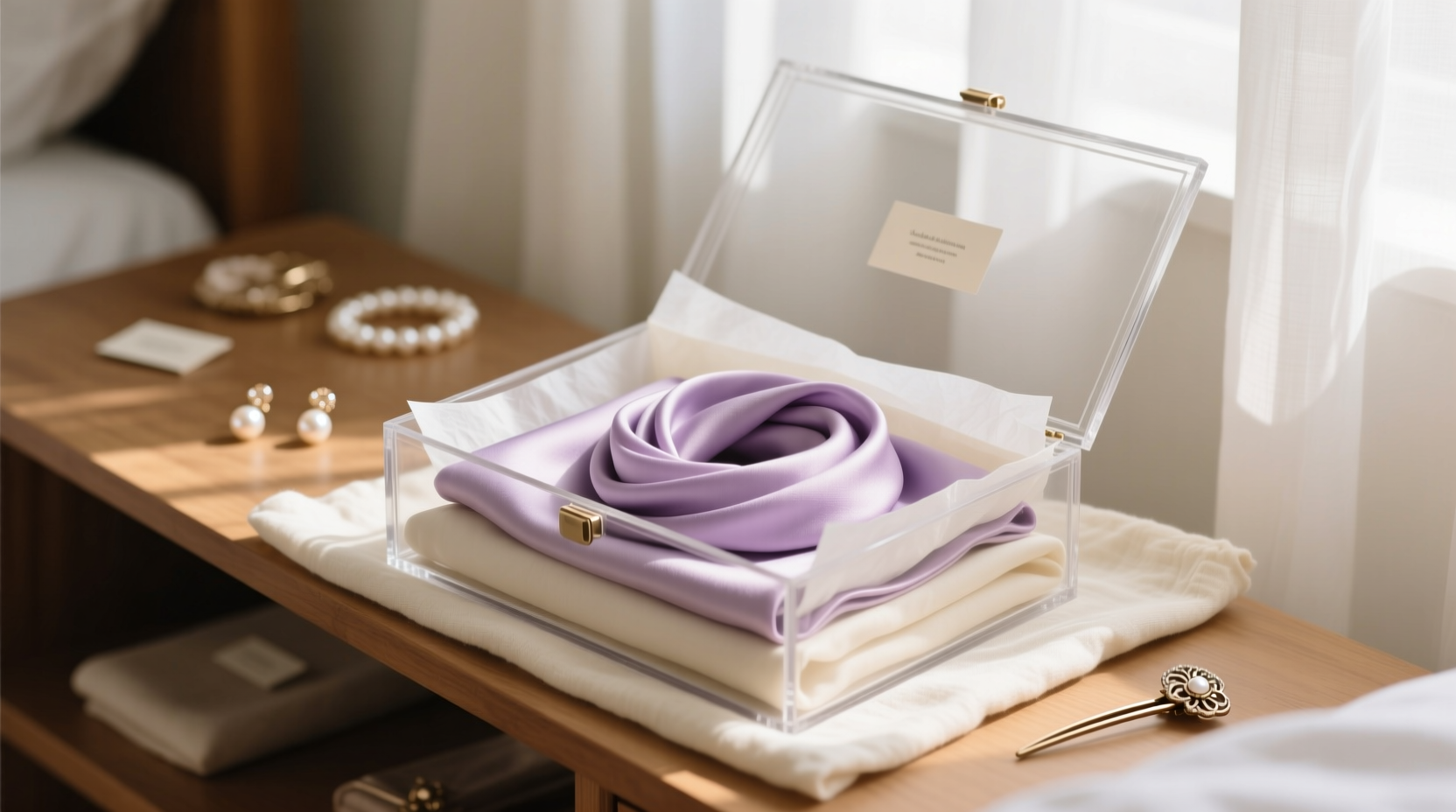
Folding is traditional and space-efficient, especially for square scarves. However, repeated folding along the same lines causes stress points and deep creases. Over time, these folds become permanent, requiring steaming or ironing—which introduces risk. To minimize damage, vary the fold lines each time you store the scarf. Use acid-free tissue paper between layers to cushion the fabric and reduce friction.
Rolling, on the other hand, eliminates sharp creases entirely. It’s ideal for lightweight, large-format scarves. Gently roll the scarf around a cardboard tube or acid-free paper cylinder, starting from one edge and maintaining even tension. Rolling distributes stress evenly and preserves the drape of the fabric. Store rolled scarves vertically in a drawer divider or horizontally in a shallow box.
For collectors with multiple scarves, combining both methods works best: fold rarely used vintage pieces with tissue protection, and roll frequently worn ones to maintain softness.
| Method | Best For | Risks | Mitigation Strategy |
|---|---|---|---|
| Folding | Small to medium square scarves, archival storage | Creasing, fiber fatigue at fold lines | Use acid-free tissue; rotate fold direction monthly |
| Rolling | Large scarves, lightweight silks, daily rotation | Unrolling mishandling, space consumption | Roll loosely; use padded tubes; store upright |
Choosing the Right Storage Container
What you store your scarves in matters as much as how you store them. The wrong container can trap moisture, restrict airflow, or expose silk to harmful chemicals.
Cotton garment bags are superior to plastic. They allow the fabric to breathe while shielding against dust and light. Look for unbleached, undyed cotton to avoid dye transfer. Avoid sealed plastic bins or vacuum bags—while they save space, they promote condensation and can lead to mildew.
For drawers, line them with acid-free paper or muslin cloth. Cedar blocks can deter moths, but never let them touch the scarves directly—cedar oil can stain silk. Instead, place blocks in corners of the closet. Similarly, lavender sachets offer a natural alternative, though some strong essential oils may react with dyes.
If displaying scarves, use shadow boxes with UV-filtering glass and keep them out of direct sunlight. Never pin silk directly to backing boards; instead, mount on padded forms using silk-safe mounting tape.
Tip: Store scarves flat in archival boxes if you own valuable vintage pieces—this minimizes gravitational stress on fibers.Step-by-Step Guide: How to Store Silk Scarves Properly
Follow this sequence to protect your silk scarves from creasing and fading:
- Clean Before Storing: Always wash or dry clean scarves before long-term storage. Body oils, perfume residues, and dirt accelerate fiber breakdown.
- Dry Thoroughly: Air-dry flat away from sunlight. Never wring or tumble dry.
- Choose Your Method: Decide whether to fold or roll based on scarf size and usage frequency.
- Use Acid-Free Tissue (if folding): Place tissue between folds to prevent abrasion and absorb minor moisture.
- Select a Breathable Container: Use cotton garment bags, lined drawers, or archival boxes.
- Store in Darkness: Place in a closet interior or drawer, away from windows and artificial lights.
- Add Pest Protection: Include cedar or lavender sachets, ensuring no direct contact with fabric.
- Rotate Quarterly: Unfold or unroll scarves every few months to check condition and change position.
Avoid These Common Storage Mistakes
- Storing while damp: Even slight moisture invites mold and weakens silk proteins.
- Using rubber bands or metal clips: These leave stains and cause tears. Use soft fabric ties if bundling.
- Piling heavy items on top: Compression leads to permanent deformation and loss of drape.
- Leaving in suitcases or travel bags: These environments are often hot, cramped, and poorly ventilated.
- Ignoring color separation: Dark scarves can bleed onto lighter ones, especially in humid conditions.
“Many people think cleaning is the hardest part—but improper storage does more long-term damage than a single wash mistake.” — Dr. Naomi Chen, Fiber Scientist, Royal School of Textiles
Real Example: Preserving a Heirloom Hermès Scarf
Sophie, a collector in Lyon, inherited a 1970s Hermès Carré from her grandmother. The scarf had sentimental value but showed faint creases and slight discoloration along the folds. After consulting a textile conservator, she changed her storage approach completely. She stopped folding it along the original lines and instead began rotating the fold direction monthly. She wrapped it in acid-free tissue and placed it in a cotton-lined box inside a dark wardrobe. She added a cedar block to the shelf below (not touching the box). Within six months, the scarf regained its soft drape, and further fading halted. Ten years later, it remains in excellent condition—proof that consistent, mindful storage reverses early damage.
Checklist: Silk Scarf Storage Best Practices
Use this checklist to ensure your scarves are stored correctly:
- ✅ Clean scarves before storing
- ✅ Ensure they are completely dry
- ✅ Fold with acid-free tissue or roll gently
- ✅ Store in breathable cotton bags or lined drawers
- ✅ Keep away from direct or prolonged artificial light
- ✅ Maintain stable temperature and humidity
- ✅ Use natural moth repellents (cedar, lavender) without direct contact
- ✅ Rotate scarves every 3–4 months
- ✅ Inspect for signs of pests or deterioration quarterly
- ✅ Separate by color to prevent dye transfer
FAQ: Common Questions About Silk Scarf Storage
Can I hang silk scarves?
Hanging is generally not recommended for long-term storage. Gravity pulls on the fabric, stretching it over time, especially at the folds or loops. Lightweight silk may develop shoulder-like bulges or lose its square shape. If you must hang them, use wide, padded hangers and rotate positions frequently. Better yet, reserve hanging for short-term display or immediate use.
How often should I air out stored silk scarves?
Airing out once every three months is ideal. On a dry, low-humidity day, lay scarves flat in a shaded indoor area for 1–2 hours. This refreshes the fibers, disperses trapped moisture, and helps detect early signs of mustiness or pests. Never air silk in direct sun—even briefly.
Is it safe to store silk scarves in vacuum-sealed bags?
No. Vacuum sealing compresses fibers unnaturally and traps residual moisture, creating a breeding ground for mold. The lack of airflow also accelerates fiber brittleness. While convenient for bulky winter clothes, this method is harmful to delicate textiles like silk.
Conclusion: Preserve Beauty Through Smart Habits
Storing silk scarves properly isn’t about perfection—it’s about consistency. Small, intentional choices compound over time: using acid-free paper, avoiding sunlight, choosing breathable containers, and rotating folds. These habits protect not just the appearance of your scarves, but their structural integrity. A beautifully preserved silk scarf carries more than aesthetic value; it holds memories, craftsmanship, and personal style. By treating it with care, you honor its legacy and extend its story.
💬 Have a silk storage tip that worked for you? Share your experience in the comments and help others protect their cherished accessories.








