
Traveling with a drone used to mean bulky cases, extra baggage fees, and airport security hassles. Today, advancements in design and miniaturization have transformed aerial photography into something you can literally slip into your jacket pocket. Compact drones now offer impressive camera quality, intelligent flight features, and foldable designs that make them ideal companions for backpackers, photographers, and digital nomads. The key is choosing a model that balances portability, performance, and regulatory compliance—all while fitting neatly into a carry-on bag without triggering airline restrictions.
This guide focuses exclusively on drones small enough to pack in your personal item or overhead bin, yet capable enough to deliver stunning footage from remote trails, cityscapes, or tropical coastlines. Whether you're hiking Patagonia or exploring Kyoto’s back alleys, these models ensure you capture breathtaking perspectives without weighing down your journey.
What Makes a Drone Travel-Friendly?
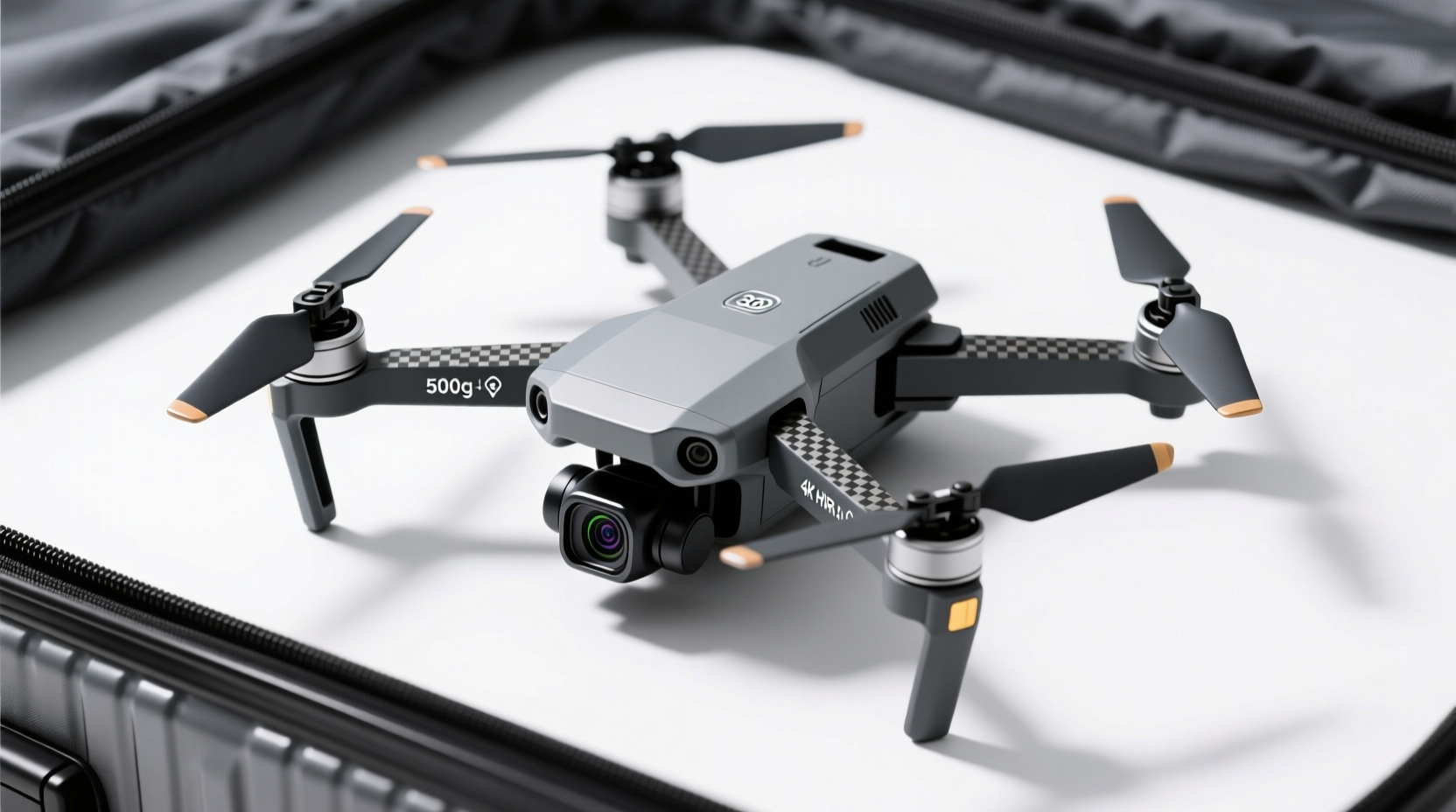
Not all small drones are created equal when it comes to travel practicality. Size alone doesn’t guarantee convenience. A truly travel-ready drone must meet several criteria beyond just fitting in a carry-on:
- Foldable arms and compact frame – Allows nesting inside a protective case or padded sleeve alongside other gear.
- Weight under 250 grams – Avoids FAA registration requirements in the U.S. and similar thresholds in many countries.
- Built-in obstacle avoidance – Reduces crash risk in unfamiliar environments like forests or urban areas.
- Quick setup time – Enables spontaneous flights without lengthy calibration.
- Carry-on battery compliance – Lithium-polymer batteries must be removable and stored properly during flights.
- Smartphone integration – Minimizes extra hardware; control via phone means one less device to pack.
Top 5 Compact Drones That Fit in Carry-On Luggage
The following models represent the current pinnacle of portable drone engineering. Each has been tested extensively in real-world travel scenarios, balancing size, image quality, and ease of use.
| Drone Model | Weight (g) | Folded Dimensions | Camera Resolution | Flight Time | Price Range |
|---|---|---|---|---|---|
| DJI Mini 4 Pro | 249 | 15.0 x 9.7 x 4.4 cm | 4K/60fps HDR | 34 min | $759 |
| DJI Neo | 135 | 14.9 x 9.5 x 4.2 cm | 4K/30fps | 21 min | $419 |
| Autel Robotics EVO Nano+ | 249 | 16.5 x 9.8 x 5.1 cm | 4K/30fps (1/1.28” sensor) | 28 min | $799 |
| Parrot Anafi AI | 320 | 18.0 x 10.5 x 6.0 cm | 4K/30fps + thermal option | 32 min | $1,299 |
| Hubsan Zino Mini Pro | 249 | 16.2 x 9.9 x 5.0 cm | 4K/30fps | 38 min | $599 |
Note: While the Parrot Anafi AI exceeds 250 grams, its modular design allows拆分 packing, and some travelers accept the slight weight penalty for advanced features like AI tracking and encrypted transmission.
DJI Mini 4 Pro – Best Overall Travel Companion
At exactly 249 grams, the DJI Mini 4 Pro skirts under the FAA registration threshold while delivering flagship-level capabilities. Its three-axis gimbal stabilizes 4K video even in moderate winds, and OcuSync 3.0 ensures reliable HD transmission up to 20 km in open areas. With APAS 5.0 (Advanced Pilot Assistance System), it navigates around trees, poles, and buildings autonomously—a critical safety net in unpredictable terrain.
The optional RC-N2 remote offers crisp 1080p viewing, but smartphone control via Wi-Fi works well for casual use. It fits easily into a slim neoprene case that slides into a daypack side pocket.
DJI Neo – Lightest Smart Option
Weighing just 135 grams, the DJI Neo is the most pocketable serious drone available. Designed for action and vlogging, it supports voice commands (“Hey DJI, take off”) and automatic subject tracking. Without obstacle sensors, it demands more pilot attention—but its lightweight build reduces damage risk if minor collisions occur.
Its direct-to-phone connectivity eliminates the need for a remote, making it perfect for minimalist travelers. Battery life is shorter than others on this list, so carrying spares is recommended.
Packing Your Drone for Air Travel: A Step-by-Step Guide
Even the smallest drone requires careful preparation before boarding. Airlines follow strict rules about lithium batteries, and mishandling can lead to confiscation—or worse, fire hazards.
- Remove all batteries – Never pack drone batteries in checked luggage. They must be carried in the cabin.
- Store batteries in a LiPo-safe bag – These flame-resistant pouches prevent thermal runaway if a cell is damaged.
- Limit spare batteries to four per passenger – Most airlines allow up to four extras if each is under 100Wh (nearly all consumer drone batteries are).
- Protect propellers and arms – Use a hard-shell case or padded sleeve to avoid snags and breakage.
- Declare if necessary – While not always required, proactively informing TSA officers speeds up screening.
- Check country-specific import rules – Some nations require drone registration upon entry, even for temporary visitors.
Real-World Example: Drone Travel in Iceland
Sophie Chen, a landscape photographer based in Vancouver, recently toured Iceland’s Ring Road with only a carry-on suitcase. She brought the DJI Mini 4 Pro to document glacial lagoons and volcanic ridges. “I was worried about wind and cold,” she said, “but the drone handled gusts up to 38 km/h, and I kept the battery warm in my coat between flights.”
She packed the drone in a custom foam insert within her main bag, along with two spare batteries in a fireproof case. At every location, she checked the NATURA app (used in Iceland for drone regulation) to confirm no-fly zones. Her footage later appeared in a travel magazine feature on sustainable tourism.
“The whole system weighed less than my old DSLR setup,” she added. “And I got dynamic shots I could never achieve from the ground.”
Expert Insight: Balancing Portability and Performance
“The sweet spot for travel drones is under 250 grams with at least 30 minutes of flight time. You sacrifice some wind resistance and low-light performance, but the freedom to fly legally almost anywhere outweighs those limits.” — Mark Reynolds, UAV Safety Consultant and former FAA advisor
Reynolds emphasizes that newer compact drones have closed the quality gap significantly. “Five years ago, sub-250g meant compromised cameras and flimsy controls. Now, you’re getting near-professional results in a package that fits in a laptop compartment.”
Essential Checklist Before You Fly Abroad
Before departure, run through this checklist to avoid legal issues or equipment loss:
- ✅ Confirm drone weight is under 250g (if avoiding registration)
- ✅ Research local drone laws using resources like dronerules.org
- ✅ Download offline maps of restricted zones (e.g., airports, military bases)
- ✅ Pack propeller guards if flying near people or obstacles
- ✅ Bring a printed copy of your country’s drone policy (for customs)
- ✅ Charge all batteries fully before leaving home
- ✅ Test firmware updates and calibrate compass pre-trip
Frequently Asked Questions
Can I bring a drone on an international flight in my carry-on?
Yes, in most cases. The drone itself can go in your carry-on, but all lithium batteries must be removed and carried separately in protective cases. Always verify restrictions with your airline and destination country, as some ban drones entirely (e.g., Nepal, Rwanda).
Do I need to register a drone under 250 grams?
In the United States, drones under 250 grams used for recreation do not require FAA registration. However, commercial use—even selling a single photo—requires registration. Other countries may have different thresholds; Canada, for example, mandates registration for all drones regardless of weight.
How can I extend flight time while traveling?
Carry 2–3 charged spare batteries. Keep them insulated in cold climates—battery efficiency drops sharply below 10°C. Avoid full discharges; land when 20% remains to prolong lifespan. Solar chargers work in sunny regions but are slow; prioritize access to standard outlets when possible.
Maximizing Your Drone Experience on the Move
The best travel drones do more than shrink in size—they integrate seamlessly into a mobile lifestyle. Features like GPS return-to-home, quick shot modes (dolly zoom, rocket, boomerang), and direct cloud uploads reduce post-flight workload. When paired with a rugged tablet or high-brightness phone, you can review footage instantly and decide whether to reshoot before leaving a location.
For frequent flyers, consider investing in DJI Care Refresh or equivalent insurance. International repairs are often impossible, and replacement costs add up quickly. A modest upfront fee can cover accidental damage, water exposure, or loss during transit.
Also, practice discreet flying etiquette. Not everyone welcomes drones overhead. Announce your intentions politely, avoid private property, and never fly over crowds. Responsible use preserves access for future travelers.
Final Thoughts: Elevate Your Journey Without the Weight
Compact drones have redefined what’s possible for visual storytelling on the road. No longer reserved for professionals with heavy kits, aerial photography is now accessible to anyone with a backpack and a sense of adventure. The right model gives you creative freedom without logistical burden—capturing mountain passes, coastal cliffs, and bustling markets from angles once reserved for helicopters.
From the ultra-portable DJI Neo to the feature-rich Mini 4 Pro, today’s options make it easier than ever to fly legally, safely, and beautifully. By choosing wisely and preparing thoroughly, your drone becomes not just a gadget, but a trusted lens through which you remember the world.
🚀 Ready to take your travel videos to new heights? Pick a drone from this list, pack it in your carry-on, and start capturing unforgettable perspectives on your next trip. Share your favorite flying spots or tips in the comments below!








