As energy prices continue to rise and environmental concerns grow, homeowners are increasingly looking for ways to reduce their electricity consumption without sacrificing comfort. One solution that’s gained widespread attention is the smart thermostat. Marketed as an intelligent way to manage heating and cooling, these devices promise energy savings, remote access, and seamless automation. But do they actually deliver meaningful reductions in electric bills? The answer depends on several factors — from your lifestyle and climate to the efficiency of your HVAC system.
While some users report cutting their heating and cooling costs by up to 20%, others see only modest improvements. Understanding how smart thermostats work, who benefits most, and what realistic expectations should be can help you make an informed decision about whether this investment is worthwhile for your household.
How Smart Thermostats Work to Save Energy
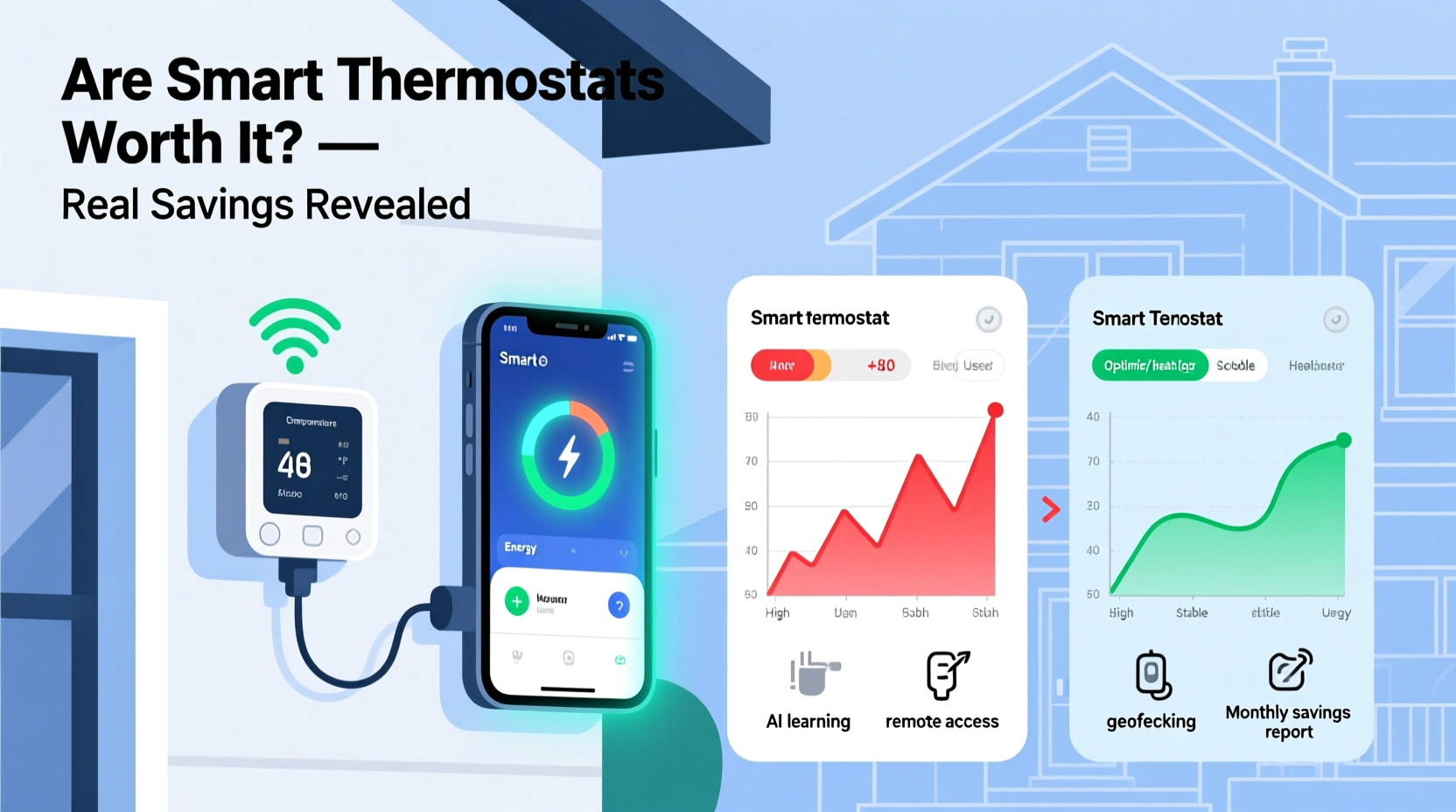
Unlike traditional programmable thermostats, which require manual input and often fall out of sync with changing routines, smart thermostats learn your behavior over time. Using sensors, Wi-Fi connectivity, and machine learning algorithms, they adjust temperature settings based on occupancy patterns, weather forecasts, and even room-by-room usage.
For example, if you typically leave for work at 8 a.m. and return around 6 p.m., the thermostat will automatically lower the heat or raise the AC during those hours. When it detects your phone approaching the house via geofencing, it begins adjusting the temperature so your home is comfortable upon arrival.
Many models also provide detailed energy reports, showing when and how much energy was used. This transparency helps users identify inefficiencies — such as running the AC while windows are open or maintaining unnecessarily low temperatures overnight.
Tip: Enable \"auto-schedule\" mode during the first week of installation to let the thermostat learn your habits quickly and accurately.Realistic Savings: What the Data Says
The U.S. Department of Energy estimates that homeowners can save about 10% annually on heating and cooling costs by turning their thermostat back 7–10°F for 8 hours a day. Smart thermostats automate this process, making consistent savings more achievable than relying on manual adjustments.
A comprehensive study conducted by the American Council for an Energy-Efficient Economy (ACEEE) analyzed real-world data from over 100,000 households using Nest Learning Thermostats. The results showed an average savings of **10–12% on heating** and **15% on cooling**, translating into roughly $131 to $145 in annual savings depending on regional climate and utility rates.
However, the study also highlighted variability: homes in milder climates saw smaller returns, while those in extreme hot or cold regions benefited more due to longer HVAC run times. Additionally, homes with older, less efficient HVAC systems had greater potential for savings simply because there was more room for optimization.
“We found that behavioral changes enabled by smart thermostats — like setting setbacks during unoccupied periods — were responsible for most of the observed energy reductions.” — Dr. Karen Palmer, Senior Fellow, Resources for the Future
Who Benefits Most from a Smart Thermostat?
Not every household will experience the same level of savings. Several key factors determine whether a smart thermostat is likely to pay for itself over time.
- Inconsistent Schedules: If your daily routine varies — working from home some days, commuting others — a smart thermostat adapts better than a fixed schedule.
- Frequent Travelers: Geofencing allows the system to detect when no one is home and adjust accordingly, avoiding wasted energy.
- Multiple Occupants: Some models support multiple user profiles and app access, helping coordinate comfort preferences across family members.
- Older Homes: Poor insulation or outdated ductwork may increase HVAC runtime; optimizing operation becomes more impactful.
- High Utility Rates: In areas where electricity costs exceed the national average (e.g., California, New England), even small percentage savings translate to larger dollar amounts.
Conversely, if your household maintains a very regular schedule and already manually adjusts the thermostat effectively, the incremental benefit may be limited. Similarly, all-electric homes in mild coastal climates might not see rapid payback periods.
Cost vs. Payback Timeline
Smart thermostats range from $100 to $270 depending on brand and features. Popular models include:
| Model | Price Range | Avg. Annual Savings | Estimated Payback Period |
|---|---|---|---|
| Nest Learning Thermostat | $249 | $135 | ~22 months |
| Ecobee SmartThermostat | $220 | $130 | ~20 months |
| Honeywell Home T9 | $199 | $120 | ~20 months |
| Google Nest Thermostat (budget) | $129 | $110 | ~14 months |
Note that rebates and utility incentives can significantly shorten the payback period. Programs offered by companies like PG&E, Con Edison, and Duke Energy frequently provide $50–$100 discounts for installing ENERGY STAR-certified smart thermostats. Check the ENERGY STAR Rebate Finder tool to explore local offers.
Mini Case Study: The Martinez Family in Phoenix, Arizona
The Martinez family lives in a 2,100-square-foot single-story home in Phoenix, where summer highs regularly exceed 110°F. Before installing a smart thermostat, they kept their AC running continuously during peak months out of concern for returning to an uncomfortable house.
They installed an Ecobee SmartThermostat with room sensors to monitor occupancy and temperature distribution. After setup, the system learned their schedule within five days. During work hours, it raised the temperature from 72°F to 78°F and used ceiling fan pre-cooling strategies before peak rate periods (4–9 PM).
Over the next 12 months, their cooling costs dropped by 18%, saving them $192 annually. With a $75 rebate from their utility provider, the net cost of the thermostat was $145 — meaning it paid for itself in just under nine months. They also appreciated the ability to adjust settings remotely when guests arrived early or plans changed.
Installation and Compatibility Considerations
One common misconception is that smart thermostats require professional installation. While hiring an HVAC technician ensures correct wiring and safety checks, many models are designed for DIY setup, especially in homes with modern HVAC systems and a common C-wire (which provides continuous power).
Without a C-wire, some thermostats use adaptive power-stealing technology, but this can lead to intermittent issues like delayed responses or Wi-Fi disconnections. It's crucial to verify compatibility before purchasing. Most manufacturers offer online compatibility checkers that ask for your HVAC model and wiring configuration.
Step-by-Step Guide: Installing Your Smart Thermostat
- Turn off power to your HVAC system at the circuit breaker.
- Remove your old thermostat and take a photo of the labeled wires for reference.
- Install the mounting plate provided with the new unit, securing it to the wall.
- Connect the wires to the corresponding terminals on the new base. Use the labels from your photo.
- Attach the thermostat to the plate and restore power.
- Download the companion app and follow the prompts to connect to Wi-Fi and configure settings.
- Run a system test to ensure heating and cooling respond correctly.
Common Pitfalls That Reduce Savings
Even the most advanced thermostat won’t save money if used incorrectly. Here are frequent mistakes that undermine performance:
- Overriding schedules too often: Constant manual adjustments prevent the device from learning and optimizing.
- Ignoring software updates: Manufacturers release firmware improvements that enhance efficiency and fix bugs.
- Placing sensors near drafts or heat sources: A thermostat located near a window, oven, or sunlight-exposed wall may misread ambient temperature.
- Not using occupancy sensors: Room sensors can prevent conditioning unused spaces, yet many users install only the main unit.
- Setting unrealistic comfort bands: Trying to maintain exact temperatures minute-to-minute increases cycling and wear.
“Automation only works if you let it run. The biggest mistake people make is treating a smart thermostat like a manual one — constantly adjusting it defeats the purpose.” — Mark Richardson, HVAC Efficiency Consultant
Checklist: Is a Smart Thermostat Right for You?
Before investing, consider the following criteria:
- ✅ Do you have a variable daily schedule?
- ✅ Are you often away from home for extended periods?
- ✅ Are your current heating/cooling bills higher than average for your region?
- ✅ Is your HVAC system relatively modern and compatible?
- ✅ Can you access rebates or utility incentives?
- ✅ Are you comfortable using smartphone apps for home control?
- ✅ Do you want insights into your energy usage?
If you answered “yes” to three or more, a smart thermostat is likely a sound investment. If most answers are “no,” you may achieve similar savings through disciplined manual adjustments or simpler programmable models.
FAQ
Do smart thermostats work with all HVAC systems?
No. While most central heating and cooling systems are compatible, older boilers, multi-zone systems, or heat pumps with auxiliary strips may require specific models or professional evaluation. Always use the manufacturer’s compatibility checker before buying.
Can I install a smart thermostat myself?
Yes, if you're comfortable with basic electrical work and your system has a C-wire. Many brands offer clear video tutorials. However, if you're unsure or lack a C-wire, professional installation (~$100–$150) ensures optimal performance and safety.
How long do smart thermostats last?
Most last 7–10 years. Regular software updates extend functionality, but hardware limitations may eventually necessitate replacement. Battery-powered sensors (if included) typically need new batteries every 6–12 months.
Conclusion: Making the Smart Choice
Smart thermostats aren’t magic boxes that slash bills overnight — they’re tools that empower smarter energy decisions. For households with irregular schedules, frequent absences, or high climate-driven HVAC usage, the savings are both measurable and meaningful. Real-world data shows average annual reductions of 10–15%, with payback periods often under two years — especially when rebates apply.
Yet, success hinges on proper installation, ongoing engagement, and realistic expectations. These devices thrive when allowed to automate, learn, and adapt. If you're willing to trust the system and make minor lifestyle adjustments, a smart thermostat can deliver both financial and comfort benefits for years to come.
🚀 Ready to cut your energy bill? Research compatible models, check for local rebates, and take the first step toward a smarter, more efficient home today.








