Homeowners across the U.S. are investing in smart thermostats with one major promise in mind: lower energy bills. Marketed as intelligent devices that learn your habits and optimize heating and cooling automatically, these gadgets claim to deliver both comfort and cost savings. But do they actually live up to the hype? With rising utility costs and growing interest in home energy efficiency, it's worth examining what the data reveals about real-world savings from smart thermostats.
Independent studies, consumer reports, and utility company evaluations have compiled years of usage data. The consensus? Yes, smart thermostats can save money—but not always, and not for everyone. The actual savings depend heavily on user behavior, climate, home insulation, HVAC system efficiency, and how well the device is configured. Understanding these variables is key to determining whether a smart thermostat will be a worthwhile investment for your household.
What Smart Thermostats Actually Do
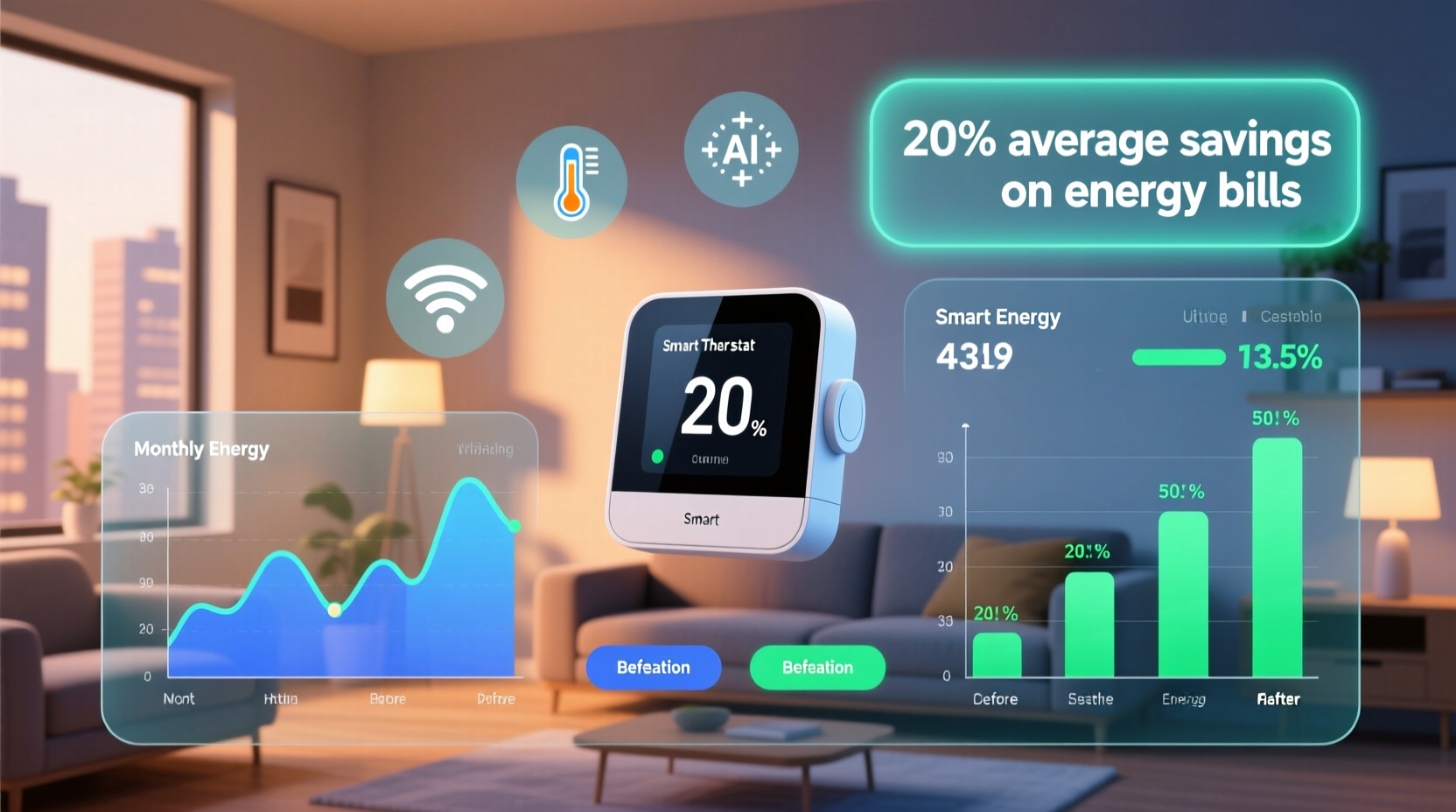
Unlike traditional programmable thermostats, which require manual scheduling and are often misused or ignored, smart thermostats use sensors, Wi-Fi connectivity, machine learning, and occupancy detection to adjust temperatures automatically. Devices like the Nest Learning Thermostat, Ecobee, and Honeywell Home T9 learn your daily routines over time and create personalized heating and cooling schedules. They can also detect when no one is home and enter an energy-saving mode, turning back on just before you return.
Additional features include remote access via smartphone apps, integration with voice assistants (like Alexa or Google Assistant), geofencing (using your phone’s location to determine occupancy), and detailed energy usage reports. Some models even qualify for rebates from utility companies, further reducing their upfront cost.
However, functionality doesn’t guarantee savings. A thermostat might be “smart,” but if it’s not properly installed, calibrated, or used in conjunction with other energy-efficient practices, its impact on your energy bill may be minimal.
Data-Driven Insights: How Much Can You Really Save?
Multiple studies have attempted to quantify the average energy savings associated with smart thermostats. The results vary, but several consistent patterns emerge:
- The U.S. Department of Energy estimates that homeowners can save up to 10% annually on heating and cooling by adjusting temperatures by 7–10°F for 8 hours a day.
- A 2020 report by the American Council for an Energy-Efficient Economy (ACEEE) analyzed over 65 field studies and found that smart thermostats delivered median savings of 10–12% on heating and 15% on cooling.
- Nest published internal data claiming users saved an average of 10–12% on heating and 15% on cooling—equivalent to about $131 to $145 per year.
- However, a 2018 study by the National Bureau of Economic Research (NBER) found that programmable thermostats—including early smart models—often led to higher energy consumption due to improper setup or user override.
The discrepancy between expected and actual savings highlights a critical point: technology alone isn’t enough. User engagement and correct configuration are essential.
“Smart thermostats have the potential to reduce residential energy use significantly, but only when households actively participate in setting goals and reviewing feedback.” — Dr. Karen Palmer, Senior Fellow, Resources for the Future
Real-World Case Study: The Johnson Family in Chicago
The Johnsons, a family of four in a 2,200-square-foot suburban home, replaced their old programmable thermostat with a Nest Learning Thermostat in October 2022. Their previous system was rarely programmed, resulting in constant heating during winter days when no one was home.
After installation, the Nest learned their schedule within two weeks. It lowered the temperature to 62°F during school and work hours and warmed the house to 68°F an hour before arrival. The family also enabled the \"Weather Boost\" feature, which adjusted settings based on outdoor conditions.
Over the next 12 months, their natural gas bill dropped from an average of $168/month in winter to $142—a 15.5% reduction. Their summer cooling costs fell by 12%, thanks to automated setbacks during daytime absences. Combined, they saved approximately $320 annually. After accounting for a $75 utility rebate, the thermostat paid for itself in under 14 months.
Their success came from consistency—not overriding the system frequently—and pairing the thermostat with other efficiency upgrades, including attic insulation and sealing air leaks.
Tip: To maximize savings, avoid manually adjusting the temperature more than once or twice a week. Frequent overrides disrupt learning algorithms and reduce efficiency.Factors That Influence Savings Potential
Not all homes benefit equally from smart thermostats. Several factors determine whether you’ll see meaningful reductions in energy spending:
Climate Zone
Homes in regions with extreme winters or hot, humid summers tend to see higher savings because HVAC systems run more frequently. In milder climates, such as coastal California, the absolute dollar savings may be smaller due to less reliance on heating and cooling.
Home Size and Insulation Quality
Larger homes or those with poor insulation lose heat or cool air more quickly, increasing HVAC workload. A smart thermostat can help manage this more efficiently than a manual one, but it can’t compensate for structural inefficiencies. Pairing the device with weatherstripping, upgraded windows, or duct sealing amplifies savings.
Existing HVAC System Age
If your furnace or air conditioner is over 15 years old, it may operate at only 70–80% efficiency. A smart thermostat won’t improve the unit’s performance, though it can prevent unnecessary cycling. For maximum savings, consider upgrading both the thermostat and HVAC equipment.
User Behavior
This is the most significant variable. Studies show that users who engage with their smart thermostat—reviewing energy reports, setting eco-temperatures, enabling away modes—save more than those who install it and forget it. Conversely, those who constantly override settings or disable auto-scheduling often see little to no savings.
Electric vs. Gas Heating
Because electricity is typically more expensive per unit of heat than natural gas, homes using electric resistance heating (such as baseboards or older heat pumps) stand to gain more from precise temperature control. However, even gas-heated homes can achieve double-digit percentage savings through reduced runtime.
Comparison: Smart Thermostats vs. Alternatives
| Thermostat Type | Average Annual Savings | User Effort Required | Upfront Cost | Best For |
|---|---|---|---|---|
| Manual Dial Thermostat | 0% | Low | $20–$40 | Renters, simple setups |
| Programmable Thermostat | 5–8% | High (must set schedule) | $30–$80 | Disciplined users |
| Smart Thermostat | 10–15% | Low to Moderate | $100–$250 | Most homeowners |
| Smart Thermostat + HVAC Upgrade | 20–30% | Moderate | $1,500+ | Energy-conscious owners |
Step-by-Step Guide to Maximizing Smart Thermostat Savings
Purchasing a smart thermostat is just the beginning. Follow these steps to ensure you get the best possible return on investment:
- Choose the Right Model: Ensure compatibility with your HVAC system. Check voltage, number of wires, and support for heat pumps or multi-stage systems. Models like Ecobee include room sensors, which help balance temperatures across large or unevenly heated homes.
- Install Correctly: Improper installation—such as placing the thermostat near a heat source or in direct sunlight—can cause inaccurate readings. If unsure, hire a licensed HVAC technician.
- Enable Learning Mode: Allow the thermostat 1–2 weeks to learn your routine without interference. Avoid frequent manual adjustments during this period.
- Set Eco Temperatures: Define comfortable but efficient ranges. For example, 68°F in winter when home, 62°F when away; 78°F in summer when home, 85°F when away.
- Use Geofencing: Link the thermostat to household members’ smartphones so it detects when everyone leaves or returns automatically.
- Review Monthly Reports: Most smart thermostats provide energy history and tips. Use this data to refine settings and track progress.
- Combine with Other Efficiency Measures: Seal ducts, replace air filters monthly, add insulation, and close vents in unused rooms to amplify savings.
Common Pitfalls That Reduce Savings
Even with the best technology, mistakes can undermine energy efficiency:
- Ignoring Maintenance Alerts: Some thermostats notify you when filters need changing or system performance drops. Disregarding these alerts leads to inefficient operation.
- Setting Extreme Temperatures: Cranking the heat or AC to extreme levels does not warm or cool your home faster—it only increases energy use.
- Installing in Problematic Locations: Walls near kitchens, bathrooms, or exterior doors can give false temperature readings, causing overuse of HVAC systems.
- Disabling Auto Features: Turning off “Auto-Schedule” or “Home/Away Assist” reverts the device to basic functionality, eliminating its primary advantage.
FAQ: Common Questions About Smart Thermostat Savings
Do smart thermostats save money in all seasons?
Yes, but the amount varies. In winter, savings come from reducing heat when no one is home. In summer, they stem from minimizing air conditioning usage during peak hours. Homes in areas with high cooling demands often see greater summertime savings.
How long does it take for a smart thermostat to pay for itself?
With average annual savings of $100–$150 and current models priced around $120–$200 (after rebates), most users break even within 1–2 years. Faster payback occurs in homes with high energy usage or outdated controls.
Can renters benefit from smart thermostats?
Yes, especially if the landlord allows installation. Many models are designed for easy removal and reinstallation. Renters should confirm lease terms and choose models that don’t require permanent wiring changes.
Final Verdict: Are Smart Thermostats Worth It?
The data confirms that smart thermostats can save money on energy bills—typically between 10% and 15% annually on heating and cooling. For the average U.S. household spending $1,200 per year on HVAC, that translates to $120–$180 in savings. When paired with rebates, tax credits, or utility incentives, the payback period becomes even shorter.
However, the technology is not a magic fix. Maximum savings require proper installation, ongoing engagement, and realistic expectations. Homeowners who expect automatic, hands-off savings without any behavioral adjustment may be disappointed.
For those willing to invest a small amount of time in setup and monitoring, a smart thermostat offers a reliable path to lower bills, improved comfort, and reduced environmental impact. It’s not just a gadget—it’s a tool for smarter energy management.
🚀 Ready to cut your energy bills? Evaluate your current thermostat habits, check for local rebates, and consider upgrading to a smart model today. Small changes now can lead to big savings over time.








