
As smartphone integration into daily driving becomes more essential, the way we mount our devices in vehicles has evolved significantly. Two dominant solutions—magnetic and adhesive phone mounts—have become staples on car dashboards. While both serve the same basic function, their safety profiles differ in meaningful ways. Understanding these differences is crucial for drivers who prioritize not only convenience but also long-term vehicle integrity and personal safety during travel.
The debate over which type of mount is safer isn’t just about holding power or ease of use—it involves considerations like heat exposure, structural reliability, emergency responsiveness, and even distraction levels while driving. This article breaks down the core mechanics, risks, and benefits of each system, helping you make an informed decision based on real-world conditions and expert-backed data.
How Magnetic and Adhesive Mounts Work
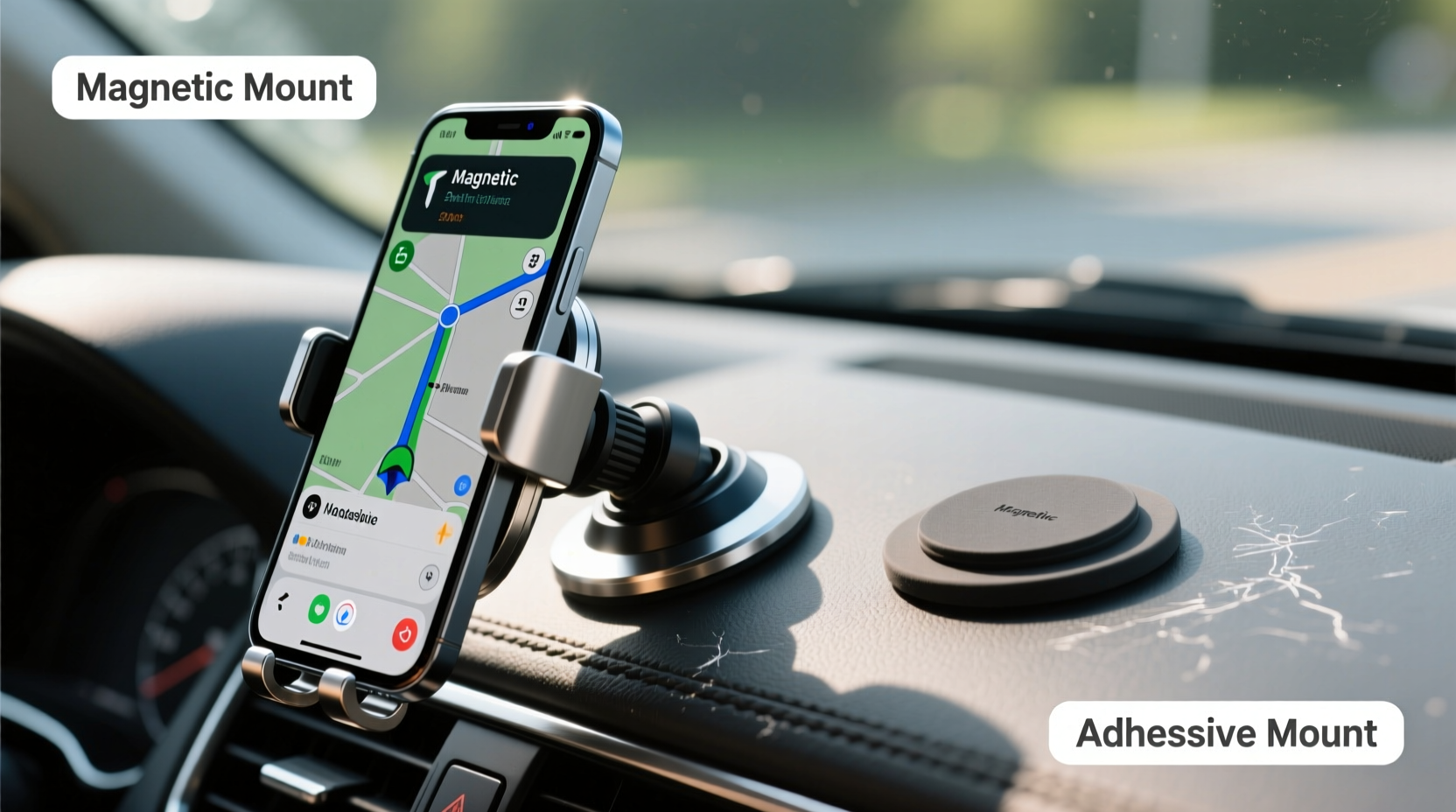
Magnetic and adhesive phone mounts operate on fundamentally different principles, each with unique implications for safety and usability.
Magnetic mounts rely on a strong neodymium magnet embedded in the holder, paired with a thin metal plate (or built-in metal ring) attached to the back of the phone or case. The magnetic force holds the phone securely in place, allowing for quick attachment and removal. Many modern magnetic systems feature alignment guides and anti-slip grips to prevent lateral movement.
Adhesive mounts, by contrast, use a sticky pad—typically made from gel or industrial-grade adhesive—to bond directly to the phone, case, or car surface. Once affixed, the mount uses a mechanical cradle or clamp to hold the device. Some models combine adhesive bases with adjustable arms that clip onto vents or attach via suction cups.
The distinction in mechanism leads to divergent performance under stress, temperature extremes, and sudden movements—all common in automotive environments.
Tip: Always clean the dashboard surface with isopropyl alcohol before applying any adhesive mount to ensure maximum bonding strength.Safety Comparison: Key Factors Evaluated
To determine which mounting solution is safer, several critical factors must be assessed: vibration resistance, crash performance, heat sensitivity, ease of access, and potential for distraction.
Vibration and Road Shock Resistance
Cars generate constant low-frequency vibrations and occasional jolts from potholes or uneven roads. Magnetic mounts generally perform better here because they maintain consistent contact without relying on adhesives that can degrade over time. The magnetic field remains stable regardless of minor shocks, whereas adhesive pads may loosen gradually due to repeated flexing of the dashboard material.
Heat and UV Exposure Impact
Dashboards can reach temperatures exceeding 160°F (71°C) in direct sunlight, especially in summer months. Prolonged heat weakens most adhesives, increasing the risk of detachment. Silicone-based gels used in many adhesive mounts tend to soften and lose grip, potentially causing the phone or mount to fall mid-drive—a serious distraction hazard.
Magnetic mounts, particularly those with metal brackets fixed using alternative methods (like vent clips or CD slot inserts), avoid this issue entirely. Even when the base is adhesive-mounted, only the smaller metal plate contacts the dashboard, minimizing heat exposure and failure risk.
Crash and Sudden Deceleration Behavior
In the event of a collision, loose objects inside a vehicle become projectiles. A securely mounted phone reduces this danger. Studies conducted by the Insurance Institute for Highway Safety (IIHS) suggest that any firmly attached device is preferable to a loose one, but the method of attachment matters.
“Mounts that allow minimal movement and resist dislodging during abrupt stops contribute to cabin safety.” — Dr. Lena Patel, Vehicle Safety Researcher at IIHS
Magnetic mounts typically release the phone upon strong impact, reducing strain on the dashboard and preventing shrapnel-like fragmentation if the plastic housing cracks. However, this intentional release could result in the phone falling into the footwell, where it might interfere with pedal operation. Adhesive mounts, if fully bonded, are less likely to detach—but if they do fail suddenly, the entire unit can launch forward unpredictably.
Comparative Analysis Table
| Factor | Magnetic Mount | Adhesive Mount |
|---|---|---|
| Heat Resistance | High – unaffected by temperature fluctuations | Low to Moderate – adhesive degrades above 140°F |
| Vibration Stability | Excellent – maintains hold under constant motion | Fair – adhesive creep can occur over time |
| Installation Reversibility | High – leaves no residue | Low – often damages surface or leaves sticky residue |
| Emergency Release Risk | Moderate – may detach during hard braking | High – sudden failure can cause flying debris |
| Dash Surface Protection | Superior – minimal contact point | Poor – prolonged use causes discoloration and warping |
| User Convenience | Excellent – one-handed attachment/detachment | Good – requires careful placement |
Real-World Example: Commuter Experience in Phoenix, AZ
Consider Maria, a daily commuter in Phoenix, where summer temperatures regularly exceed 115°F. She initially used an adhesive suction cup mount on her dashboard. Within three weeks, the adhesive failed completely after a day parked in direct sun. The mount fell onto the center console, cracking her phone screen when she braked suddenly.
She switched to a magnetic mount with a metal plate stuck to her phone case. After six months of identical conditions, the mount remained secure. Even more importantly, she found it easier to dock and undock her phone while wearing gloves or handling bags, reducing fumbling at red lights. Though the metal plate slightly increased bulk, she deemed the trade-off worthwhile for consistent performance and reduced stress.
This scenario illustrates how environmental conditions amplify the weaknesses of adhesive systems—and why magnetic alternatives are increasingly favored in extreme climates.
Best Practices for Safe Phone Mounting
No mount is inherently safe without proper installation and usage habits. Below is a checklist to maximize safety regardless of your chosen system.
Phone Mount Safety Checklist
- ✅ Position the mount outside the driver’s primary line of sight but within easy glancing range
- ✅ Ensure the phone does not block airbags or instrument cluster visibility
- ✅ Use a high-quality metal plate designed for magnets (avoid thick or warped versions)
- ✅ Clean all surfaces thoroughly before applying adhesive components
- ✅ Test stability by gently shaking the phone once mounted
- ✅ Replace adhesive pads every 3–6 months, especially in hot climates
- ✅ Avoid placing mounts near heated vents or direct sunlight when possible
Step-by-Step Guide to Installing a Magnetic Mount Safely
Follow this sequence to ensure your magnetic mount performs reliably and safely:
- Choose the location: Select a spot on the dashboard or vent that allows clear navigation visibility without obstructing gauges or windshield view.
- Power down electronics: Turn off ignition and disconnect Bluetooth to avoid interference during setup.
- Attach the metal plate: Place the included metal disc on the back of your phone or case. Center it vertically for balanced magnetic pull.
- Test alignment: Bring the phone close to the magnetic holder to confirm automatic snap-in behavior and proper orientation.
- Secure the mount base: If using an adhesive-backed magnetic holder, clean the area with alcohol wipe, press firmly for 30 seconds, and wait 24 hours before full use.
- Final check: Simulate road conditions by tapping the dashboard lightly and verifying the phone stays locked.
This process minimizes errors and ensures both functional efficiency and long-term durability.
Frequently Asked Questions
Can magnetic mounts damage my phone?
No, modern smartphones are not affected by the magnets used in car mounts. Compasses and GPS may experience temporary interference when very close to the magnet, but this resolves once removed. Credit cards and RFID chips are generally safe unless placed directly between the phone and magnet for extended periods.
Do adhesive mounts ruin my dashboard?
Yes, prolonged use often leaves behind sticky residue or causes permanent discoloration due to UV filtering. The adhesive can also trap moisture, accelerating material degradation. Removal attempts sometimes peel protective coatings from plastic surfaces.
Which is better for frequent phone changes?
Magnetic mounts are superior for users who switch phones often. Simply transfer the metal plate between devices. With adhesive mounts, reapplying sticky pads repeatedly diminishes effectiveness and increases clutter.
Expert Insight on Long-Term Reliability
According to automotive ergonomics specialist Raj Mehta, “The future of in-car phone integration leans toward standardized magnetic systems, much like what we see with Apple’s MagSafe ecosystem. These provide repeatable, reliable engagement that passive adhesives simply cannot match over time.”
“Magnetic coupling offers predictable detachment forces—important for both usability and safety—whereas adhesive bonds degrade invisibly until failure.” — Raj Mehta, Automotive Interface Designer
This predictability makes magnetic systems more trustworthy in dynamic environments like moving vehicles, where consistency translates directly to safety.
Conclusion: Prioritizing Safety and Practicality
When evaluating magnetic versus adhesive phone mounts for car dashboards, the evidence strongly favors magnetic options for overall safety. They resist heat-induced failure, minimize surface damage, offer quicker access, and provide more consistent performance across diverse conditions. While neither system eliminates all risks, magnetic mounts present fewer failure modes and greater adaptability.
Ultimately, the safest mount is one that keeps your phone secure, accessible, and out of harm's way—without becoming a hazard itself. By choosing a quality magnetic solution and installing it correctly, you enhance both convenience and safety on every journey.
💬 Have you switched from adhesive to magnetic? Share your experience or questions below—we’d love to hear what works best for your driving routine.








