
Anime has long been celebrated for its dynamic characters, emotional depth, and imaginative worlds. Yet, as the genre evolves, fans are growing increasingly vocal about certain narrative crutches—especially when it comes to villains. While compelling antagonists can elevate a story, many series continue to rely on outdated, overused tropes that undermine character development and weaken dramatic impact. From monologuing masterminds to tragic backstories that excuse genocide, these clichés have become predictable, frustrating, and often detrimental to storytelling.
The issue isn’t just repetition—it’s how these tropes frequently prioritize shock value or spectacle over psychological realism and moral complexity. As audiences mature and global tastes shift toward nuanced antiheroes and morally gray conflicts, clinging to tired villain archetypes risks alienating viewers and stalling creative growth in the medium.
This article explores the most criticized anime villain tropes, explains why they’ve worn out their welcome, and offers insight into what could replace them. By retiring these stale devices, creators can craft more authentic, memorable antagonists who challenge protagonists—and audiences—in meaningful ways.
The Monologue-Driven Mastermind
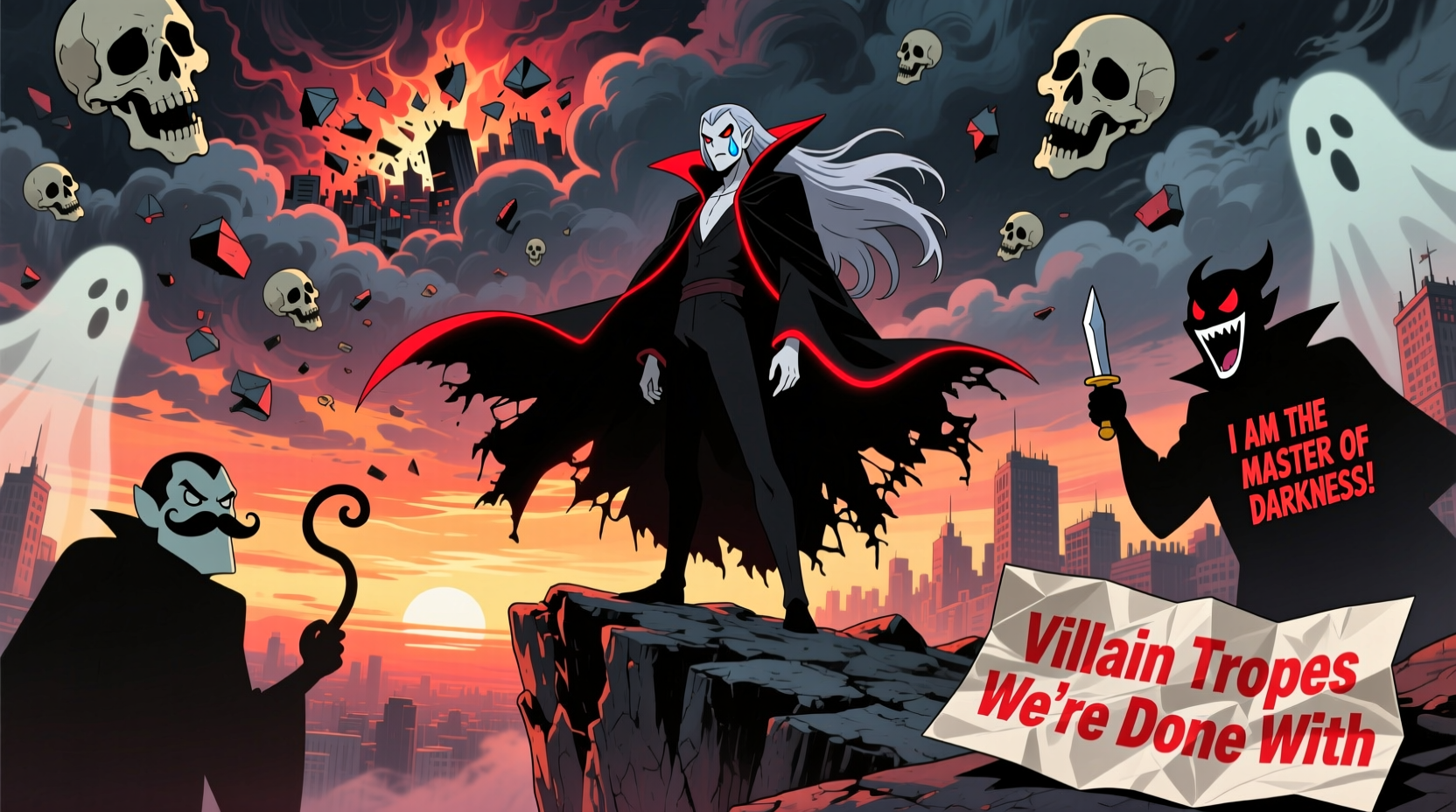
One of the most infamous villain behaviors is the extended monologue delivered at the worst possible moment—usually right before delivering the final blow. The villain pauses, explains their entire life story, philosophy, and plan in meticulous detail, giving the hero just enough time to power up, realize their true potential, and strike back with renewed vigor.
This trope undermines tension and logic. In real conflict, decisive action wins. A truly dangerous antagonist wouldn’t stop to gloat—they’d eliminate the threat. Yet time and again, anime villains choose exposition over execution, sacrificing credibility for melodrama.
Tip: Let actions speak louder than speeches. A silent, calculating villain can be far more terrifying than one who explains every motive.Fans argue this device feels artificial and manipulative, designed less to develop the villain and more to extend runtime or give the hero a contrived second wind. It also reduces the villain to a plot function rather than a fully realized character.
Tragic Backstory as Moral Excuse
“They destroyed my village.” “My family was murdered.” “I was betrayed by the world.” These lines appear so frequently in anime that they’ve become punchlines. While trauma can inform motivation, too many villains use past suffering as a blanket justification for mass murder, world domination, or apocalyptic schemes.
The problem isn’t exploring pain—it’s how easily these backstories absolve villains of accountability. Characters like Frieza, Madara Uchiha, or Griffith commit atrocities on a cosmic scale, yet their actions are often framed sympathetically because of early-life hardship. This creates a dangerous narrative: extreme violence is forgivable if you’ve suffered enough.
“We need villains who are complex, not excused. Suffering doesn’t automatically make cruelty heroic.” — Dr. Akari Tanaka, Media Studies Professor at Kyoto University of the Arts
Audiences are calling for antagonists whose motivations aren’t rooted solely in personal loss but in ideological conviction, systemic critique, or even genuine belief in their cause—even if that cause is horrifying. This allows for richer moral debates and prevents trauma from becoming a narrative free pass.
World Destruction as Default Goal
How many anime villains want to destroy the world? Not metaphorically—literally obliterate it, reset it, or replace it with a dream realm where everyone is “happy” under their control. Whether through god-like powers, ancient artifacts, or forbidden jutsu, annihilation is presented as the ultimate endgame.
The flaw lies in the lack of imagination. Destroying everything removes stakes. If no one survives, there’s no future to fight for, no society to rebuild, no legacy. It makes the villain’s goal abstract and emotionally hollow. Fans point out that more compelling threats involve transformation, control, or subjugation—not erasure.
Consider villains who seek to reshape society, enforce order through tyranny, or manipulate perception. These goals preserve human agency and allow for resistance, negotiation, and internal conflict. They also mirror real-world power struggles, making stories feel more grounded and impactful.
The Lone Wolf Savior Complex
Closely tied to the tragic backstory is the villain who believes only they can fix the world. Isolated, brilliant, and burdened by insight, they reject cooperation and assume the role of self-appointed messiah. Their logic? “No one else understands. I must do this alone.”
This trope romanticizes authoritarianism. It suggests that empathy, democracy, and collective action are naive, while unilateral decisions—even violent ones—are signs of strength and clarity. Series like Death Note flirt with this idea through Light Yagami, whose descent into megalomania is framed with unsettling glamour.
Fans argue that this archetype glorifies toxic individualism. Instead of challenging systems, it reinforces the myth of the genius outsider who knows better than everyone. More progressive narratives might explore reform through collaboration, civil disobedience, or institutional change—showing that saving the world doesn’t require becoming a dictator.
Redemption Arcs That Ignore Consequences
Perhaps the most controversial trope is the last-minute redemption of a villain who has committed unforgivable acts. With a single tear, a whispered apology, or a sacrificial death, characters responsible for millions of deaths are suddenly forgiven—by the story, the heroes, and the audience.
While redemption can be powerful, it becomes problematic when it bypasses accountability. True redemption involves restitution, ongoing remorse, and living with consequences—not dying heroically to erase past sins. When villains are absolved without facing justice, it sends a troubling message: evil deeds can be undone with sentimentality.
Tip: Redemption should be earned, not granted. Show the aftermath of harm, the difficulty of forgiveness, and the cost of rebuilding trust.Fans advocate for stories where redemption is uncertain, partial, or even rejected. A villain might express regret but still face imprisonment. Or they may try to make amends and fail. These outcomes respect the gravity of their actions and honor the victims’ experiences.
Case Study: Pain vs. Obito in *Naruto*
No discussion of anime villain tropes is complete without examining *Naruto*, a series that both exemplifies and critiques these patterns. Consider Nagato (Pain) and Obito Uchiha—two characters shaped by war, loss, and twisted ideals.
Nagato’s arc includes a detailed backstory, a desire to end suffering through fear, and a climactic redemption after Naruto confronts him with empathy. His death is poignant, and his legacy is honored. But critics note that his village’s destruction and mass killing of Konoha citizens are quickly overshadowed by his sorrow.
Obito, meanwhile, spends years enabling war, manipulating enemies, and betraying allies—all while claiming to act for peace. In the final arcs, he repents after a brief emotional exchange and dies saving Naruto. The speed and ease of his turnaround frustrated many fans, who felt his actions warranted deeper reckoning.
This case highlights the imbalance: emotional catharsis often trumps ethical consistency. While these moments aim for drama, they risk trivializing trauma and normalizing cycles of violence justified by love or loss.
Checklist: Building Better Anime Villains
To move beyond tired tropes, writers and creators can follow this actionable checklist for crafting more compelling antagonists:
- Give them coherent ideology – What do they believe in? Why do they think their method is necessary?
- Avoid trauma as sole motivation – Let backstory inform, not define, their choices.
- Make their goals tangible – Control, reform, or protect something specific, not just “destroy the world.”
- Allow moral ambiguity – Let the audience question whether the hero is always right.
- Show consequences of their actions – Don’t erase harm with a quick redemption.
- Let them win sometimes – Victory doesn’t have to go to the hero every time.
- Humanize without forgiving – Show vulnerability without excusing cruelty.
Table: Overused Tropes vs. Fresh Alternatives
| Tired Trope | Why It’s Problematic | Better Alternative |
|---|---|---|
| Villain monologues before killing | Breaks immersion; gives hero easy escape | Villain acts decisively; creates real tension |
| “I lost my loved one” = justification for genocide | Equates grief with entitlement to violence | Villain grapples with grief but chooses a flawed solution |
| Desire to destroy/rewrite the world | Removes stakes; lacks realism | Seeks to control, reform, or purify existing world |
| Lone savior complex | Romanticizes authoritarianism | Villain leads a movement or cult with followers |
| Instant redemption via death | Ignores accountability and healing | Redemption is slow, incomplete, or rejected |
FAQ
Why do anime villains always want to destroy the world?
It’s a dramatic shortcut. Total annihilation creates high stakes and justifies epic battles. However, it often lacks nuance. Real-world threats are usually about control, inequality, or ideology—not erasing existence. Writers use world destruction because it’s visually and emotionally extreme, but it rarely explores the societal or psychological layers behind such a choice.
Can a villain be sympathetic without being excused?
Absolutely. Sympathy means understanding someone’s pain or perspective—not agreeing with their actions. A well-written villain can evoke empathy while still being held accountable. For example, a character might believe they’re saving humanity through harsh measures, but the story shows the collateral damage and moral cost. This balance respects both emotional depth and ethical responsibility.
Are redemption arcs inherently bad?
No—but they must be earned. Redemption should involve struggle, restitution, and long-term change. Too often, anime uses redemption as an emotional finale without showing the hard work of atonement. A meaningful arc includes setbacks, resistance from victims, and ongoing consequences. When done right, it can be powerful. When rushed, it feels like a narrative cheat.
Conclusion: Time for a New Era of Antagonists
The call to retire outdated anime villain tropes isn’t about censorship—it’s about evolution. Fans aren’t rejecting dark themes, powerful foes, or emotional backstories. They’re asking for more intelligent, respectful storytelling that treats villains as people, not plot devices.
By moving beyond monologues, trauma-based justifications, and world-ending schemes, creators can build antagonists who challenge the status quo in meaningful ways. Imagine villains who lead social movements, exploit systemic flaws, or believe in peace through oppressive control. These figures don’t need capes or cataclysms to be threatening—they’re dangerous because their ideas resonate.
As anime continues to reach global audiences, the demand for sophisticated narratives will only grow. The next generation of iconic villains shouldn’t rely on what’s been done for decades. They should reflect the complexities of power, morality, and change in a way that provokes thought, not eye rolls.
💬 What anime villain trope frustrates you the most? Share your thoughts in the comments and join the conversation about the future of anime storytelling.








