When winter rolls around, drivers across North America face a familiar question: should they stick with their current tires or invest in something more capable? The terms “all-season,” “all-weather,” and “snow tires” are often used interchangeably—but they’re not the same. For those living in regions with mild winters—think occasional rain, light frost, and maybe a dusting of snow—the decision isn’t always clear-cut. Is switching to dedicated winter tires worth the cost and hassle? Or can modern all-season or all-weather tires handle the job just fine?
The answer depends on understanding what each tire type is engineered to do, how they perform under cold conditions, and what your local climate actually demands. This guide cuts through the marketing jargon and delivers a practical, evidence-based comparison to help you make an informed choice.
Understanding Tire Categories: What’s the Difference?
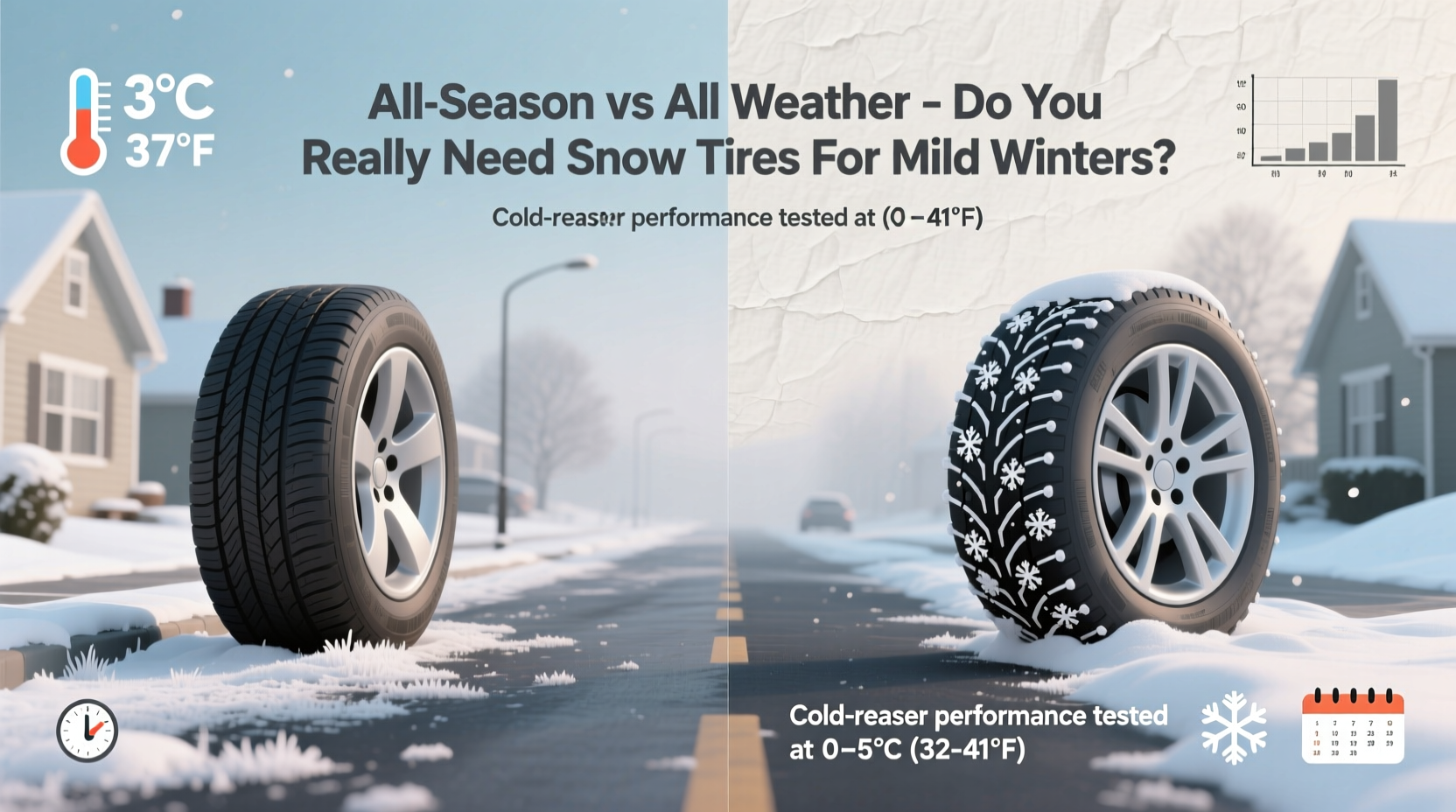
Tire classifications aren’t arbitrary—they reflect specific performance standards, materials, and design philosophies. Confusion arises because naming conventions overlap and vary by region. Let’s clarify the three main categories:
- All-Season Tires: Designed as a year-round compromise for moderate climates. They feature tread patterns and rubber compounds that work reasonably well in dry, wet, and light cold conditions—but begin to lose effectiveness below 45°F (7°C).
- All-Weather Tires: A hybrid category certified for both summer and winter use. These carry the Three-Peak Mountain Snowflake (3PMSF) symbol, meaning they meet minimum snow traction standards. Their rubber stays flexible in cold temperatures, offering better grip than standard all-seasons when it’s chilly.
- Winter (Snow) Tires: Built exclusively for cold, snowy, and icy conditions. They use ultra-soft rubber compounds and aggressive tread designs optimized for snow evacuation and ice biting. Performance peaks below 30°F (-1°C), but they wear quickly and handle poorly in warm weather.
“Tire performance isn’t linear—it drops off sharply once temperatures fall below 45 degrees. Many drivers don’t realize their all-season tires are already compromised before the first snowflake falls.” — Dr. Lena Cho, Tire Materials Engineer, University of Michigan Transportation Research InstituteTip: Look for the 3PMSF symbol on the sidewall—it’s the only reliable indicator that a tire meets regulated winter performance standards.
Performance Breakdown: How Do They Compare in Real Conditions?
On paper, all-season tires may seem sufficient. But real-world driving involves variables like sudden stops, black ice, slush buildup, and temperature swings. Here's how the three types stack up across key metrics:
| Performance Factor | All-Season | All-Weather | Winter Tires |
|---|---|---|---|
| Flexibility Below 45°F | Poor – hardens significantly | Good – stays pliable | Excellent – optimized soft compound |
| Wet Braking (40°F) | Average | Very Good | Excellent |
| Snow Traction | Fair – struggles in deeper snow | Good – passes 3PMSF test | Superior – superior siping and biting edges |
| Ice Handling | Poor | Fair | Best-in-class |
| Warm Weather Wear | Excellent | Good | Poor – degrades rapidly above 50°F |
| Lifespan (Miles) | 50,000–70,000 | 40,000–55,000 | 25,000–40,000 (seasonal use) |
The data shows a clear hierarchy: winter tires outperform in cold and snow, all-weather tires offer a balanced middle ground, and all-season tires degrade fastest in winter conditions—even without snow on the ground.
Do You Really Need Snow Tires for Mild Winters?
If your winters consist of temperatures hovering between 35°F and 50°F, rare frost, and infrequent light snow that melts within hours, dedicated snow tires may be overkill. However, “mild” doesn’t mean “safe.” Consider this: even a thin layer of frost at dawn can drastically reduce traction, especially on bridges and shaded roads. And most accidents happen during the transition periods—early morning freeze or afternoon thaw—when road surfaces are unpredictable.
In such environments, all-weather tires often represent the smartest investment. They eliminate the need for seasonal swaps while delivering significantly better cold-weather performance than standard all-seasons. Unlike true winter tires, they’re legal and safe to drive year-round.
That said, if you travel occasionally to colder areas—say, a mountain getaway or a visit to family in a snow-prone region—having four winter tires mounted on a separate set of wheels can be a game-changer. It’s not about daily driving; it’s about preparedness for high-risk situations.
Mini Case Study: Sarah from Portland, Oregon
Sarah drives a 2021 Subaru Outback in Portland, where winters are damp but rarely severe. She previously used OEM all-season tires and felt confident—until one January morning when she hit a patch of black ice on her commute. Despite AWD, her car slid into a guardrail during a routine stop. No injuries, but $2,800 in repairs.
After consulting a local tire specialist, she switched to all-weather tires with the 3PMSF rating. “I expected a slight improvement,” she says, “but the difference in braking and cornering on wet, cold roads was immediate. Last December, I drove to Mount Hood for a weekend trip. With rental snow chains on my old tires, I’d have been stressed. But with all-weather tires, I felt secure the whole way.”
Sarah didn’t go full winter—she didn’t need to. But upgrading from basic all-season to certified all-weather made a measurable difference in safety and confidence.
When All-Season Tires Fall Short
Many drivers assume that all-season tires are “good enough” because they come standard on most vehicles. But manufacturers prioritize cost, noise, fuel efficiency, and longevity—not winter performance. As temperatures drop, the silica-reinforced rubber in all-season tires stiffens, reducing contact patch compliance and increasing stopping distances.
Studies by the Rubber Manufacturers Association show that at 35°F, all-season tires require up to 30% longer stopping distance on wet pavement compared to all-weather or winter tires. On snow-covered roads, the gap widens to 50% or more.
Moreover, all-wheel drive (AWD) does not compensate for poor tires. AWD helps with acceleration, but braking and cornering depend entirely on tire grip. A front-wheel-drive sedan with winter tires will outperform an SUV with worn all-seasons on icy roads every time.
Tip: Test your current tires’ winter readiness: if the tread depth is below 6/32\", they’re already compromised for snow. Replace them before winter starts.Step-by-Step Guide: Choosing the Right Tire for Your Climate
Follow this decision framework to determine the best tire strategy for your situation:
- Assess Your Winter Conditions: Track average winter temps, frequency of precipitation, and typical road maintenance in your area. Use historical data from local DOT reports or weather services.
- Evaluate Your Risk Tolerance: Are you comfortable driving in marginal conditions? Do you have emergency supplies in your car? High tolerance might allow for all-weather tires; low tolerance may justify winter tires.
- Check Your Current Tires: Look for the 3PMSF symbol. If absent, they’re not designed for winter use. Measure tread depth—anything below 6/32\" reduces snow capability.
- Consider Logistics: Do you have space to store a second set of wheels? Can you afford two sets of tires? If not, all-weather tires are likely your best bet.
- Plan for Travel: If you frequently drive through mountain passes or visit snowy regions, consider keeping winter tires on a spare set of rims. Swap them temporarily when needed.
- Consult a Local Expert: Visit a trusted tire shop. Technicians who live in your climate can offer insights based on real-world feedback from customers.
Checklist: Tire Readiness for Mild Winter Driving
- ☐ Confirm tire type: Does it have the 3PMSF symbol? (Critical for all-weather claims)
- ☐ Measure tread depth: Aim for at least 6/32\" for winter safety
- ☐ Check inflation monthly: Cold air reduces pressure; underinflated tires increase stopping distance
- ☐ Inspect for cracks or dry rot: Aging rubber loses flexibility, even if tread looks good
- ☐ Evaluate driving patterns: Frequent early-morning commutes? Hilly terrain? Adjust accordingly
- ☐ Prepare an emergency kit: Blankets, flashlight, phone charger, traction aids (even with good tires)
Frequently Asked Questions
Can I use all-season tires in winter if I have AWD?
AWD improves acceleration on slippery surfaces but does nothing for braking or cornering. Without proper winter-rated tires, you’re still at high risk of skidding. AWD with all-seasons offers a false sense of security. Pair AWD with 3PMSF-rated tires for optimal safety.
Are all-weather tires worth the extra cost?
Yes, for drivers in mild to moderate winter zones. They typically cost 10–20% more than all-season tires but deliver noticeably better grip, shorter stopping distances, and greater peace of mind. Over five years, the added safety and avoided seasonal changes often justify the price.
How long do winter tires last if I only use them part-time?
Properly stored and used only during cold months (about 4–5 months per year), winter tires can last 4–6 seasons. Rotate them regularly, keep them inflated during storage, and avoid using them when temperatures consistently exceed 50°F to prevent premature wear.
Final Recommendation: Match the Tire to the Risk
For truly mild winters—zones with minimal snow, infrequent freezing, and reliable road treatment—upgrading from standard all-season to certified all-weather tires is often the most practical solution. They offer meaningful safety improvements without requiring seasonal swaps or dual investments.
Dedicated snow tires are essential if you experience regular snowfall, sustained sub-freezing temps, or drive in rural areas with delayed plowing. But for many suburban and urban drivers, all-weather tires strike the right balance between performance, convenience, and cost.
The bottom line: tires are your vehicle’s only point of contact with the road. Don’t let outdated assumptions or sticker shock dictate your choice. Invest in the right rubber for your conditions, and you’ll gain not just better handling—but critical seconds in an emergency stop.
🚀 Ready to upgrade your winter safety? Check your tires today, look for the 3PMSF symbol, and talk to a local tire professional about your options. Your future self—driving confidently through the next cold snap—will thank you.








