Many drivers assume that all-wheel drive (AWD) eliminates the need for winter tires. After all, power to all four wheels should mean better grip on snow and ice, right? While AWD improves acceleration in slippery conditions, it doesn’t enhance braking or cornering—two critical aspects of winter driving safety. The truth is, even with AWD, your vehicle’s performance in cold weather hinges more on tire choice than drivetrain configuration. Understanding the differences between all-season and winter tires—and how they interact with AWD systems—is essential for safe winter driving.
The Science Behind Tire Performance in Cold Weather
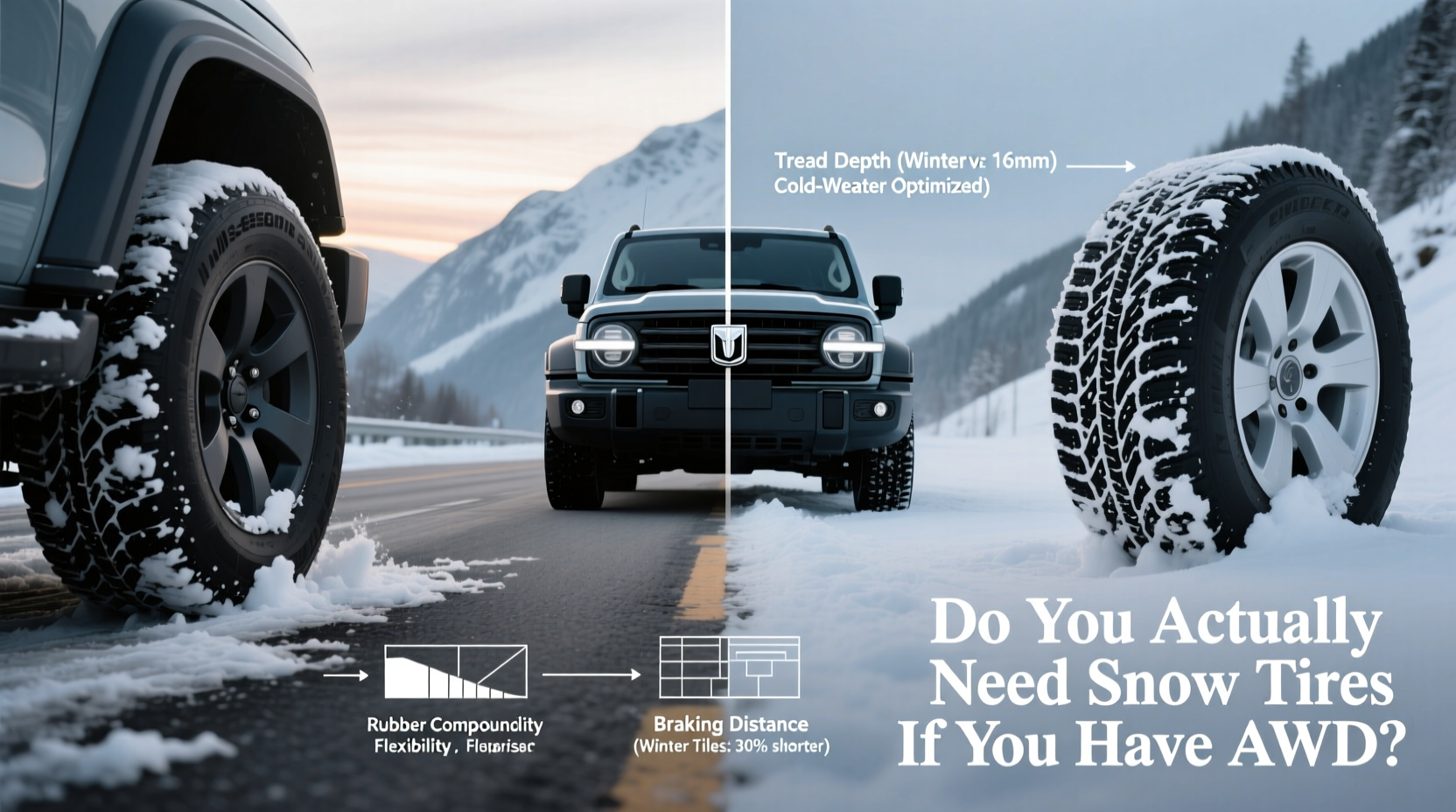
Tire performance is heavily influenced by rubber compound and tread design. All-season tires are engineered as a compromise: suitable for spring, summer, and mild fall conditions, but not optimized for sustained temperatures below 45°F (7°C). When temperatures drop, the rubber in all-season tires hardens, reducing flexibility and grip. This loss of pliability means less contact with the road surface, especially on snow and ice.
In contrast, winter tires use specialized rubber compounds that remain soft and elastic in freezing temperatures. These compounds contain higher levels of silica and natural rubber, allowing the tread to conform to micro-irregularities in icy roads. Additionally, winter tires feature deeper treads with thousands of tiny slits called sipes. These sipes act like miniature suction cups, biting into snow and ice to generate traction.
“Traction starts at the tire, not the drivetrain. No amount of AWD can compensate for inadequate rubber.” — Dr. Markus Fischer, Tire Dynamics Researcher, University of Michigan Transportation Institute
All-Season vs Winter Tires: A Real-World Comparison
To illustrate the difference, consider a test conducted by the Tire Rack team comparing identical SUVs—one equipped with all-season tires, the other with winter tires—on a snowy track. Both vehicles had AWD systems. Results showed the winter-tired SUV stopped 30% shorter from 30 mph on packed snow and accelerated 25% faster from a standstill. In cornering tests, the winter tires maintained control at significantly higher speeds before sliding.
This demonstrates a key principle: AWD helps you go, but tires help you stop and turn. Without proper winter tires, even advanced electronic stability controls struggle to maintain control once grip is lost.
Tip: Don’t wait for the first snowfall to switch tires. Install winter tires when average daily temperatures consistently dip below 45°F.AWD Myths and Misconceptions
One of the most dangerous misconceptions is that AWD provides superior braking or handling in winter. It does not. AWD only distributes engine power to wheels with grip. If none of the wheels have traction due to poor tires, the system cannot create grip out of thin air. Drivers often overestimate their vehicle’s capabilities because AWD allows them to accelerate confidently on snow, leading to delayed braking and overconfident cornering—both of which increase accident risk.
Another myth is that modern all-season tires are “good enough” for light snow. While some all-season tires carry the Three-Peak Mountain Snowflake (3PMSF) symbol—indicating they meet minimum snow traction standards—they still fall short of true winter tires in severe conditions. The 3PMSF rating is a baseline, not a guarantee of optimal performance.
Key Differences: All-Season vs Winter Tires
| Feature | All-Season Tires | Winter Tires |
|---|---|---|
| Rubber Compound | Hardens below 45°F | Remains flexible in sub-zero temps |
| Tread Depth | Moderate (8–10/32\") | Deeper (10–12/32\") |
| Sipe Density | Low to moderate | High (thousands per tire) |
| Braking on Ice (from 30 mph) | ~120 feet | ~80 feet |
| Lifespan in Warm Weather | 50,000–70,000 miles | 30,000–40,000 miles (if used year-round) |
| Best Operating Temp Range | 45°F and above | Below 45°F |
When Can You Skip Winter Tires?
There are scenarios where winter tires may be optional. Drivers in regions with mild winters—such as the Pacific Northwest or Mid-Atlantic states with infrequent, light snowfall—may find high-quality all-season tires with the 3PMSF symbol sufficient. However, anyone who regularly drives in areas with prolonged snow cover, black ice, or sub-freezing temperatures should strongly consider switching to winter tires.
Even in cities with reliable snowplows, early morning frost or untreated side streets can pose serious risks. Emergency services, delivery drivers, and parents transporting children to school benefit greatly from the added margin of safety winter tires provide.
“I thought my Subaru Outback with AWD was invincible until I hydroplaned on slush at 35 mph. Switched to winter tires the next fall. Night and day difference.” — Rachel Nguyen, Colorado resident and daily commuter
Step-by-Step Guide: Transitioning to Winter Tires
Switching to winter tires isn’t complicated, but doing it right ensures maximum safety and longevity. Follow this timeline:
- October – Research and Purchase: Identify compatible winter tires for your vehicle. Look for the 3PMSF symbol and read independent reviews.
- Early November – Mount and Balance: Have winter tires mounted on dedicated rims (optional but recommended). This saves time and wear on your all-seasons.
- Late November – Install: Swap tires before the first major storm. Many shops offer storage for off-season tires.
- December–March – Drive Safely: Adjust driving habits: increase following distance, brake earlier, and avoid sudden maneuvers.
- April – Rotate Back: Remove winter tires when temperatures consistently exceed 45°F. Store them in a cool, dry place away from sunlight and ozone sources.
Cost vs. Safety: Is It Worth It?
Investing in a second set of wheels and winter tires typically costs $800–$1,400, depending on vehicle size and tire quality. While this seems steep, compare it to the cost of a collision, insurance hike, or medical bills from a winter accident. Insurance companies like CAA and Progressive report that vehicles with winter tires experience up to 30% fewer winter-related claims.
Additionally, using winter tires only during cold months extends the life of both your winter and all-season sets. Rotating between two sets reduces wear and can lead to long-term savings.
Checklist: Do You Need Winter Tires?
- Do you live in a region with regular snowfall or freezing temps? → Yes = Winter tires recommended
- Do you drive on rural, unplowed roads? → Yes = Strongly recommended
- Do you frequently drive at dawn or dusk when black ice forms? → Yes = Recommended
- Is your vehicle older or lacking advanced traction/stability controls? → Yes = Highly recommended
- Are you comfortable stopping and turning on wet snow? → If unsure = Get winter tires
Expert Consensus: What the Data Says
A 2022 study by Transport Canada found that winter tires reduce collision involvement by 25% compared to all-season tires in provinces with harsh winters. In Quebec, where winter tires are mandatory from December to March, wintertime crash rates dropped by 11% after the law took effect.
Automotive journalists and safety organizations—including Consumer Reports, AAA, and the Rubber Manufacturers Association—unanimously recommend winter tires for anyone facing consistent winter conditions, regardless of drivetrain.
“AWD gets you moving. Winter tires keep you from going off the road. They’re not interchangeable—they’re complementary.” — Jamie Hyneman, mechanical engineer and former host of MythBusters
Frequently Asked Questions
Can I just use all-season tires with AWD instead of winter tires?
You can, but you’re compromising safety. AWD improves launch traction, but all-season tires lose grip in cold temperatures. For braking, cornering, and overall control on snow and ice, winter tires are far superior—even with AWD.
Are snow chains a good alternative to winter tires?
Snow chains provide excellent traction on deep snow but are impractical for daily use. They’re loud, damage pavement, and are often illegal on clear roads. They’re best used as emergency traction aids, not replacements for proper winter tires.
Will winter tires wear out faster if I use them year-round?
Yes. Winter tire compounds are designed for cold conditions. In warm weather, they soften excessively, leading to rapid wear, reduced fuel efficiency, and poor handling. Always switch back to all-season or summer tires when temperatures rise above 45°F.
Conclusion: Safety Over Assumption
Having AWD does not eliminate the need for winter tires—it complements them. Relying solely on AWD with all-season tires creates a false sense of security. Real-world performance in snow, ice, and cold rain depends overwhelmingly on the tire’s ability to maintain grip. Winter tires deliver that grip through advanced materials and design, making them the single most effective upgrade for winter safety.
Whether you drive a compact sedan or a rugged SUV, equipping your vehicle with proper winter tires is a decision rooted in physics, not marketing. It’s about giving yourself the best possible chance to stop, steer, and stay in control when conditions turn dangerous. Don’t gamble with winter driving. Make the switch, drive with confidence, and arrive safely.
💬 Have experience with AWD and winter tires? Share your story or tips in the comments—your insight could help others make safer choices this winter.








