Carrying high-interest credit card debt can feel like running in place—each payment barely makes a dent in the principal. For many, a balance transfer is a strategic move to consolidate debt and reduce interest costs. The key lies in finding affordable options with competitive introductory rates and low or no fees. While some premium cards offer 0% APR deals, they often come with strict eligibility requirements or hidden costs. This guide explores realistic, budget-conscious balance transfer cards that deliver real savings without compromising on value.
How Balance Transfers Work: A Quick Primer
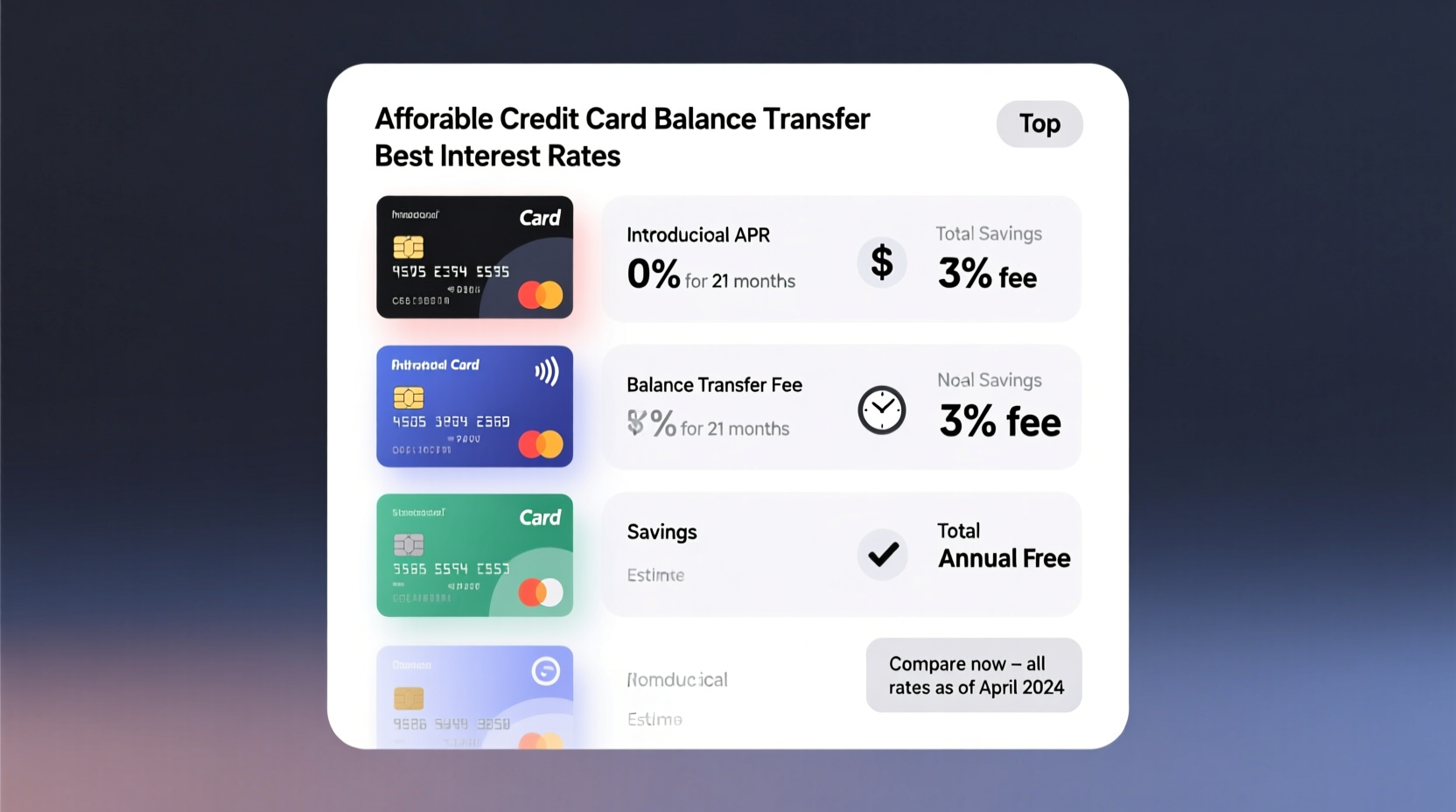
A balance transfer involves moving existing credit card debt from one or more high-interest cards to a new card offering a lower promotional rate—often 0% for a set period. These introductory periods typically last between 12 and 21 months. During this time, you can pay down your balance without accruing additional interest, making it easier to become debt-free.
The real benefit comes from redirecting money previously spent on interest toward actual debt reduction. However, not all balance transfer offers are created equal. Factors like transfer fees, post-promotional APRs, and credit requirements determine whether a deal is truly affordable.
Tip: Always calculate the balance transfer fee before applying—even a 3% fee can add up on large balances.Top Affordable Balance Transfer Cards in 2024
While flashy marketing may spotlight big-name issuers, several lesser-known or mid-tier cards provide excellent value for those seeking low-cost debt consolidation. Below is a comparison of five accessible options with strong terms and minimal fees.
| Card Name | Introductory APR | Duration (Months) | Balance Transfer Fee | Regular APR After Intro |
|---|---|---|---|---|
| Credit One Bank Platinum Visa | 0% for 12 months | 12 | 3% ($5 minimum) | 18.74% – 26.74% (V) |
| Capital One Quicksilver Secured | 0% for 15 months | 15 | 3% intro fee (then up to 5%) | 19.99% (V) |
| BankAmericard Credit Card | 0% for 18 months | 18 | Either 3% or 5% of transfer amount | 19.99% – 29.99% (V) |
| Petal® 2 \"Cash Back, No Fees\" Card | Up to 12 months 0% | Up to 12 | No annual or foreign transaction fees | 16.74% – 24.74% (V) |
| Discover it® Balance Transfer | 0% for 18 months | 18 | 3% intro, then up to 5% | 19.99% – 29.99% (V) |
Note: “(V)” indicates variable APR. Offers subject to credit approval.
Among these, the BankAmericard and Discover it® stand out for their 18-month 0% periods, giving users ample time to eliminate debt. Meanwhile, the Petal® 2 card appeals to those building credit, as it reports to major bureaus and has no hidden fees.
Step-by-Step Guide to Executing a Smart Balance Transfer
Making a successful balance transfer isn’t just about signing up for a new card. It requires planning and discipline. Follow this sequence to maximize savings and avoid setbacks.
- Assess your total debt: List all credit card balances, APRs, and minimum payments. Prioritize high-interest balances for transfer.
- Check your credit score: Most 0% APR cards require fair to good credit (650+ FICO). Use free tools like Credit Karma or Experian to verify your standing.
- Compare transfer terms: Focus on intro period length, transfer fees, and regular APR after the promo ends.
- Apply strategically: Submit applications only after confirming eligibility. Multiple hard inquiries can hurt your score.
- Initiate the transfer: Once approved, request the transfer during account setup or via customer service. Provide creditor details and account numbers.
- Set up a repayment plan: Divide your transferred balance by the number of months in the intro period. Stick to that monthly target.
- Stop using old cards: Avoid accumulating new debt. Consider freezing or locking old accounts if temptation persists.
Real Example: How Maria Paid Off $7,000 in 15 Months
Maria had accumulated $7,000 across two credit cards with APRs ranging from 24% to 27%. Her minimum payments totaled $350 per month, mostly covering interest. After researching options, she applied for the Capital One Quicksilver Secured card, qualifying for 0% APR for 15 months with a 3% transfer fee ($210).
She transferred the full balance and committed to paying $467 per month—just over $100 more than her previous minimums. By staying consistent and avoiding new charges, she paid off the entire balance before the promotional period ended, saving over $1,400 in interest.
“I didn’t think I could qualify because of my past late payments,” Maria said. “But securing the card with a deposit gave me a second chance—and the 0% rate made the math work.”
“Balance transfers are most effective when treated as a short-term solution with a long-term payoff. The goal isn’t to shift debt—it’s to eliminate it.” — James Reed, Certified Financial Planner
Common Pitfalls and How to Avoid Them
Even well-intentioned balance transfers can backfire without proper awareness. Here are frequent mistakes and how to sidestep them.
- Ignoring the transfer fee: A 3–5% fee may seem small but adds hundreds to your balance. Factor it into your repayment plan.
- Missing payments: One late payment can trigger penalty APRs, sometimes above 30%, and cancel the 0% offer.
- Spending on the new card: Adding new purchases defeats the purpose. Many cards exclude new spending from the 0% rate.
- Not having a payoff timeline: Without a clear schedule, you risk carrying a balance into the high-interest phase.
- Applying for multiple cards at once: Too many inquiries in a short window can lower your credit score temporarily.
Checklist: Before You Initiate a Balance Transfer
Use this checklist to ensure you’re making a financially sound decision:
- ✅ Calculated total balance to transfer including potential fees
- ✅ Checked current credit score and report for accuracy
- ✅ Compared at least three balance transfer offers side-by-side
- ✅ Confirmed the length of the 0% APR period
- ✅ Verified the regular APR that applies after the intro period
- ✅ Created a monthly repayment target based on the promo duration
- ✅ Committed to not using the new card for purchases
- ✅ Scheduled automatic payments to avoid missed deadlines
Frequently Asked Questions
Can I transfer a balance from any type of loan?
Most balance transfer cards allow transfers from other credit cards and sometimes personal loans or store cards. Cash advances and mortgages cannot be transferred. Check with the issuer for specific eligibility.
Does a balance transfer hurt my credit score?
It can have a temporary impact. Opening a new account lowers your average account age, and a hard inquiry appears on your report. However, reducing your credit utilization ratio by consolidating debt often leads to long-term score improvement.
What happens when the 0% period ends?
Any remaining balance begins accruing interest at the card’s standard variable APR. To avoid surprises, aim to pay off the full amount before the promotional rate expires.
Maximize Your Savings with Informed Choices
Finding affordable balance transfer options doesn’t require perfect credit or deep pockets. With careful research and disciplined repayment, even mid-tier cards can provide significant relief from high-interest debt. The real savings come not from the lowest advertised rate, but from choosing a card you can realistically manage and paying it off within the promotional window.
Start by auditing your current debt, reviewing your credit profile, and comparing transparent offers. Then take action—because every dollar saved on interest is a step closer to financial freedom.
💬 Ready to take control of your debt? Share your balance transfer experience or ask questions in the comments below—we’re here to help you make smarter financial moves.