For guitarists at any level, staying in tune is non-negotiable. Whether you're practicing at home, performing live, or recording in a studio, a dependable tuner ensures your sound remains professional and polished. Among the many tuning options available, clip-on tuners stand out for their portability, accuracy, and ease of use. They attach directly to your instrument’s headstock, detecting vibrations rather than ambient sound, which makes them ideal for noisy environments.
The market is flooded with models ranging from budget-friendly to high-end, but not all deliver equal performance. The challenge lies in finding a balance: a tuner that's both affordable and consistently reliable. This guide cuts through the noise, highlighting top-performing clip-on tuners under $50, explaining key features to consider, and offering real-world advice to help you make an informed decision.
Why Clip-On Tuners Are a Smart Choice
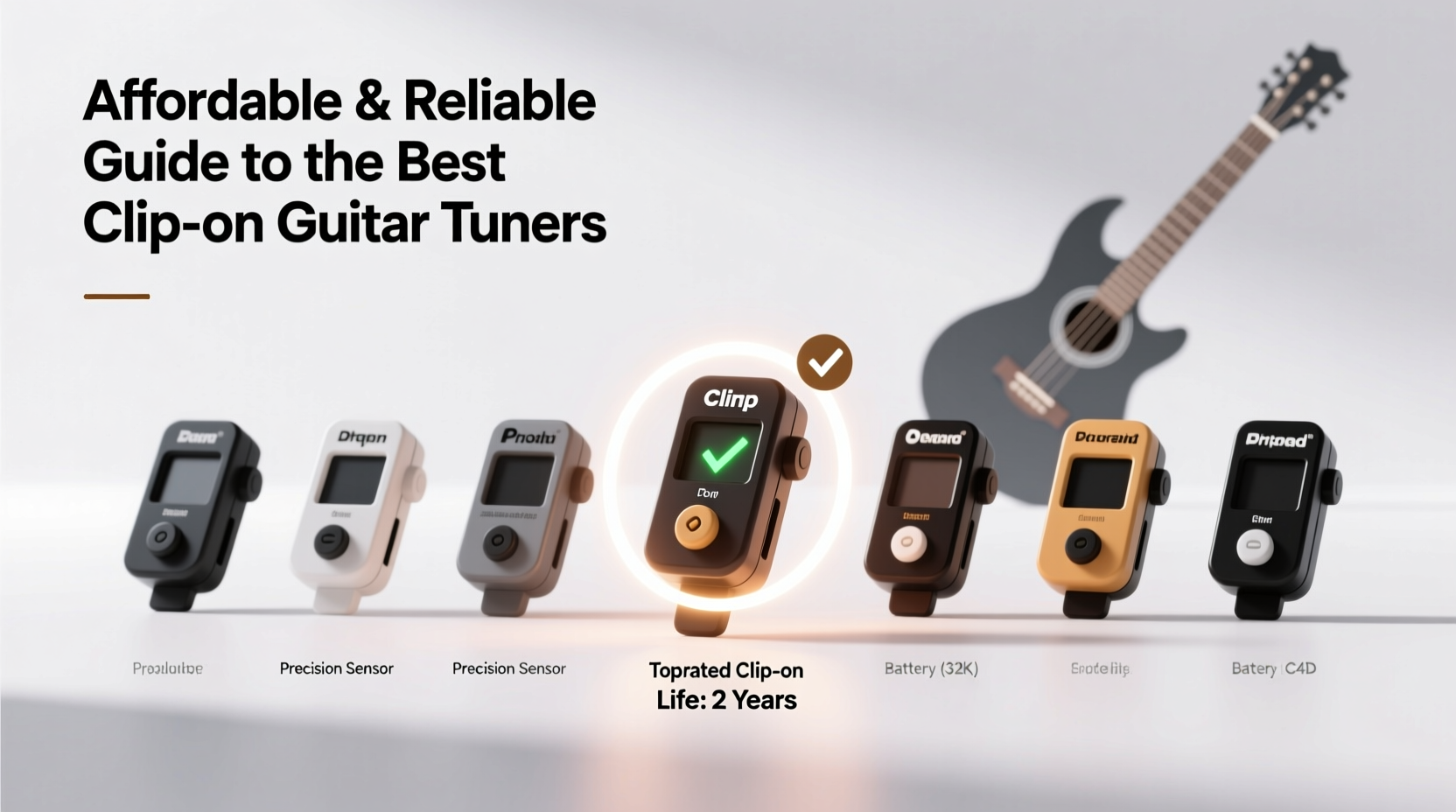
Unlike microphone-based or app tuners, clip-on models detect physical vibrations through the guitar’s body. This means they’re less affected by background noise—perfect for stage use, band rehearsals, or even outdoor gigs. Their compact design allows for easy transport, and most require only a single coin-cell battery that lasts for months.
Beginners benefit from the simplicity of visual feedback—LEDs or LCD screens that clearly indicate when a string is sharp, flat, or in tune. Experienced players appreciate the speed and precision, especially when switching between alternate tunings like drop D or open G.
Tip: Always tighten your strings slowly when tuning up to avoid breaking them, and let the tuner register the pitch steadily before adjusting further.Key Features to Look For
Not all clip-on tuners are created equal. To get the most value for your money, focus on these essential features:
- Tuning Accuracy: Look for tuners with ±1 cent accuracy—the industry standard for precision.
- Display Type: LED or LCD screens with clear indicators (arrows, color changes) make tuning faster and more intuitive.
- 360-Degree Swivel Head: Allows flexible positioning so you can read the display whether the tuner is clipped on front, back, or side.
- Vibration Sensitivity: High sensitivity ensures accurate readings even on quieter acoustic instruments.
- Battery Life: Most use CR2032 batteries; aim for models rated at 30+ hours of continuous use.
- Auto-Off Function: Prevents unnecessary battery drain when left on accidentally.
“Even the most expensive guitar will sound amateurish if it’s out of tune. A good clip-on tuner is the cheapest insurance you can buy.” — Mark Reynolds, Touring Guitar Technician
Top 5 Affordable and Reliable Clip-On Tuners
The following models have been tested across playing styles, environments, and budgets. All are priced under $40 and deliver consistent performance.
| Model | Price Range | Accuracy | Key Feature | User Rating |
|---|---|---|---|---|
| Korg Pitchclip 3 | $25–$30 | ±0.1 cent | Ultra-compact, 360° swivel, works on electric, acoustic, bass | 4.8/5 |
| Peterson StroboClip HD | $35–$40 | ±0.02 cent | Highest accuracy in class, bright full-color display | 4.7/5 |
| D’Addario NS Micro Tuner | $20–$25 | ±1 cent | Smallest footprint, discreet design, magnetically attaches | 4.6/5 |
| TUNERIFY Clip-On Guitar Tuner | $15–$20 | ±1 cent | Budget king, large display, includes metronome mode | 4.5/5 |
| CheaperRig CT-03 | $12–$15 | ±1 cent | Best ultra-budget option, durable build, auto-off | 4.4/5 |
Real-World Example: The Weekend Gigging Musician
Consider Alex, a part-time guitarist who plays at local bars and open mics. He used a free phone tuner app but struggled during loud sets—feedback and crowd noise made tuning nearly impossible. After investing $28 in the Korg Pitchclip 3, his setup time dropped from five minutes to under one. The tuner worked flawlessly on both his Fender Stratocaster and Martin acoustic, even with amplifiers blaring nearby. Over six months, he hasn’t replaced the battery, and the swivel head lets him see the display from any angle on stage.
This isn’t just convenience—it’s confidence. Knowing his guitar is perfectly tuned between songs has improved his overall performance and reduced anxiety.
How to Choose the Right Tuner for Your Needs
Your ideal tuner depends on how and where you play. Follow this step-by-step checklist to narrow your options:
- Assess your primary instrument: Acoustic guitars may need higher vibration sensitivity; bass players should confirm low-E detection.
- Consider visibility: If you perform live, choose a model with a bright, rotatable screen.
- Check battery accessibility: Some tuners seal the battery compartment, making replacements harder.
- Test responsiveness: A good tuner should lock onto pitch within half a second.
- Look for extra modes: Chromatic tuning, flat-tuning detection, and mute functions add versatility.
Frequently Asked Questions
Can I use a clip-on tuner on an acoustic guitar?
Yes, absolutely. Clip-on tuners work exceptionally well on acoustics because they pick up string vibrations through the headstock. In fact, they often perform better than microphone-based apps in noisy rooms.
Do cheaper tuners lose accuracy over time?
Most budget tuners maintain accuracy for years under normal use. However, very low-cost models (<$10) may have inconsistent sensors or dim displays. Stick to reputable brands—even budget ones like TUNERIFY or CheaperRig—to ensure longevity.
Is a strobe tuner worth the extra cost?
For most players, no. True strobe tuners (like Peterson’s高端 models) offer laboratory-grade precision, useful for luthiers or studio techs. For everyday tuning, a high-quality digital tuner like the Pitchclip 3 or StroboClip HD is more than sufficient.
Essential Care Tips for Longevity
A clip-on tuner is a small investment, but proper care extends its life and maintains reliability. Follow this simple checklist:
- ✅ Wipe the rubber contact pad occasionally to remove dust and oils.
- ✅ Remove the battery if storing for over a month.
- ✅ Avoid extreme temperatures—don’t leave it in a hot car or near heaters.
- ✅ Store in a case or pouch to prevent accidental drops.
- ✅ Test monthly, even if not in regular use, to catch battery issues early.
“Tuners are like seatbelts—you don’t miss them until you need them. And when you do, there’s no substitute for reliability.” — Lena Torres, Music Instructor & Session Player
Final Thoughts and Next Steps
Staying in tune shouldn’t be a struggle, nor should it require spending hundreds of dollars. The best clip-on guitar tuners combine precision, durability, and thoughtful design—all within reach of most players. Whether you're a beginner learning your first chords or a seasoned performer navigating complex setlists, a dependable tuner is a silent partner in your musical journey.
The Korg Pitchclip 3 remains our top recommendation for most users: compact, accurate, and proven across thousands of gigs. But if you’re on a tight budget, the CheaperRig CT-03 delivers surprising performance for under $15. For those who demand elite accuracy, the Peterson StroboClip HD is worth the slight premium.
🚀 Ready to tune with confidence? Pick one of the models above, keep it clipped to your headstock, and never worry about being out of tune again. Share your favorite tuner in the comments below—your insight could help another musician find their perfect match.








