Earaches are among the most common yet intensely uncomfortable health issues, affecting both children and adults. Whether caused by an infection, changes in air pressure, or fluid buildup, the sharp pain or persistent dull throb can disrupt sleep, concentration, and daily routines. While severe or recurring cases require medical evaluation, many people find quick, reliable relief through affordable over-the-counter (OTC) solutions. The key is knowing which products work, how to use them safely, and when to seek professional help.
Understanding the Causes of Ear Pain
Before selecting any OTC remedy, it’s essential to understand what might be causing the discomfort. Common causes include:
- Otitis media: Middle ear infection, often following a cold, especially in children.
- Otitis externa: Swimmer’s ear—an infection of the outer ear canal.
- Eustachian tube dysfunction: Blockage due to allergies or congestion, leading to pressure imbalance.
- Barotrauma: Pressure-related pain during flying or diving.
- Wax impaction: Buildup of earwax pressing against the eardrum.
While OTC treatments can ease symptoms, they do not cure infections. If fever, hearing loss, dizziness, or drainage occurs, consult a healthcare provider promptly.
Tip: Never insert cotton swabs or sharp objects into the ear—this can worsen pain or cause injury.Top Over-the-Counter Medications for Earache Relief
The most effective OTC approaches focus on reducing inflammation, relieving pain, and addressing underlying congestion. Here are the primary categories:
1. Pain Relievers and Anti-Inflammatories
These are the first line of defense for managing ear pain:
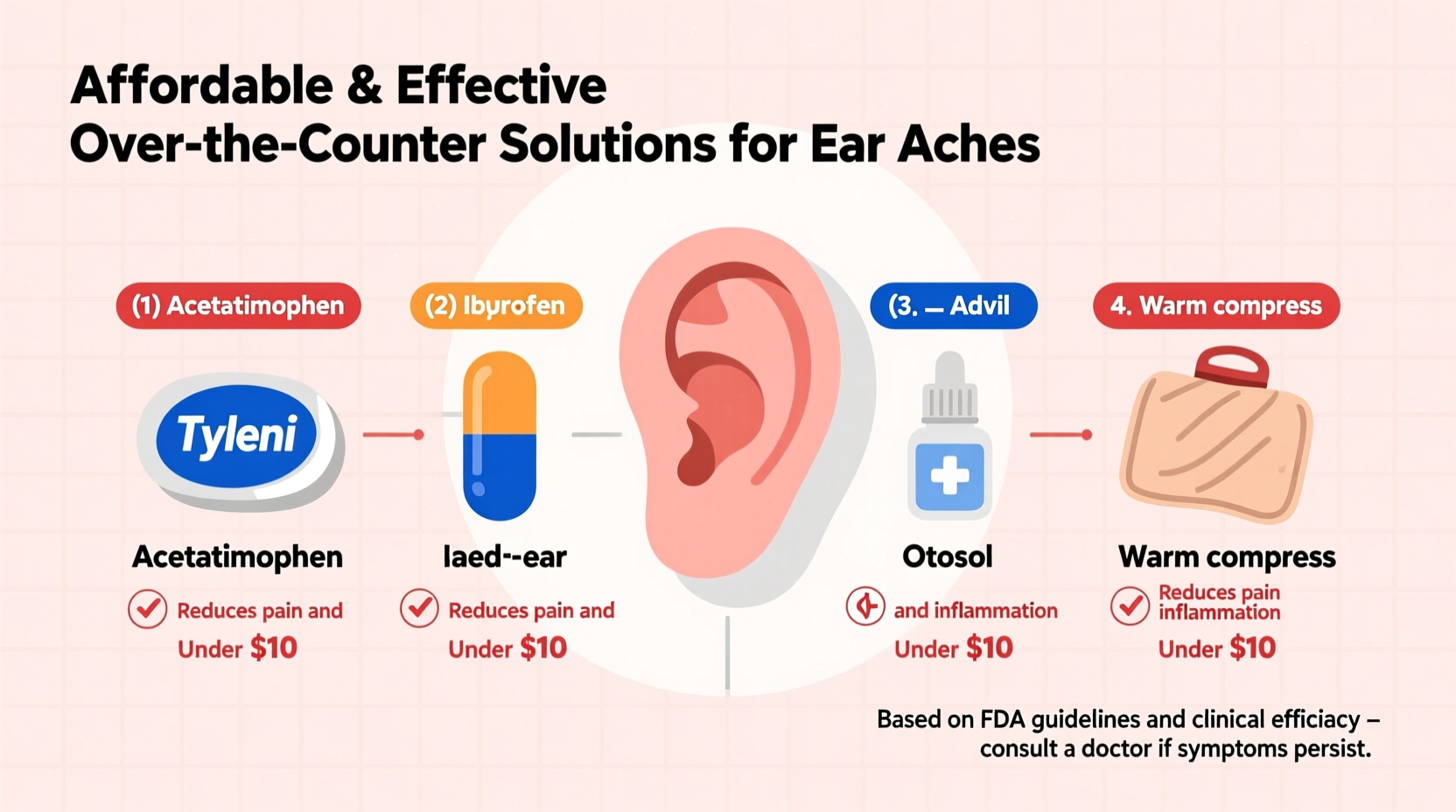
- Acetaminophen (Tylenol): Effective for pain and fever with minimal stomach irritation. Safe for children when dosed appropriately.
- Ibuprofen (Advil, Motrin): Reduces both pain and inflammation. Often more effective than acetaminophen for moderate to severe earaches due to its anti-inflammatory action.
Dosing should follow age and weight guidelines. Avoid giving aspirin to children under 18 due to the risk of Reye’s syndrome.
2. Decongestants and Antihistamines
If the earache stems from congestion or allergies, these may help:
- Pseudoephedrine (Sudafed): A potent oral decongestant that reduces swelling in nasal passages and Eustachian tubes.
- Phenylephrine: Less effective than pseudoephedrine but available without restrictions.
- Antihistamines (e.g., loratadine, cetirizine): Useful if allergies contribute to fluid buildup.
Note: These do not directly treat the ear but may relieve pressure by improving drainage.
“Pain management with ibuprofen or acetaminophen is often sufficient for mild ear discomfort, especially while waiting for a viral infection to resolve.” — Dr. Lena Patel, Primary Care Physician
Ear Drops: What Works and What Doesn’t
OTC ear drops can provide fast, localized relief—but only if used correctly and for the right condition.
| Product Type | Active Ingredient | Best For | Avoid If |
|---|---|---|---|
| Pain-relieving drops | Benzocaine, antipyrine | Temporary numbing of outer/middle ear pain | Eardrum perforation or drainage present |
| Wax removal drops | Carbamide peroxide | Earwax blockage causing pressure | Ear infection or pain without wax confirmed |
| Swimmer’s ear drops | Isopropyl alcohol, glycerin | Drying ears after swimming | Active infection or broken skin |
Popular brands like Star-Otic or generic antipyrine/benzocaine solutions offer rapid numbing effects within minutes. However, never use ear drops if there's any sign of eardrum rupture (drainage, sudden hearing loss).
Tip: Warm ear drops to body temperature by holding the bottle in your hand for a few minutes—cold drops can cause dizziness.Home Remedies and Supportive Care
Alongside OTC medications, several low-cost, evidence-supported methods can enhance comfort:
Warm Compress
Applying a warm washcloth or heating pad (on low) to the affected ear increases blood flow and helps relax tense muscles around the jaw and ear. Apply for 15–20 minutes every few hours.
Stay Upright
Lying flat can increase pressure in the middle ear. Propping up the head with pillows during sleep may reduce pain intensity.
Chewing and Yawning
These actions help open the Eustachian tubes, equalizing pressure—especially useful during air travel or with congestion.
Natural Options
- Garlic oil: Has natural antimicrobial and analgesic properties. Some studies suggest it may be as effective as standard ear drops for mild pain.
- Olive oil: Can soothe dryness or loosen wax but does not treat infection.
While appealing, avoid putting unsterile substances like breast milk or onion juice in the ear—these lack clinical backing and could introduce bacteria.
Step-by-Step Guide to Managing an Earache at Home
Follow this practical timeline to address ear pain safely and effectively:
- Assess symptoms: Determine onset, severity, and associated signs (fever, cold, hearing changes).
- Relieve pain: Take ibuprofen (200–400 mg) or acetaminophen (500–1000 mg) as directed.
- Apply warmth: Use a warm compress to the ear for 15–20 minutes.
- Try ear drops (if appropriate): Only if no drainage or suspected rupture; use OTC pain-relieving or drying drops as needed.
- Address congestion: Use a decongestant or saline nasal spray to promote Eustachian tube drainage.
- Monitor for 24–48 hours: If pain persists, worsens, or is accompanied by fever or discharge, contact a healthcare provider.
“Most earaches in adults resolve within 2–3 days with supportive care. The goal is symptom control while the body heals.” — Dr. Mark Tran, ENT Specialist
Mini Case Study: Sarah’s Airplane-Induced Ear Pain
Sarah, a 34-year-old teacher, experienced intense ear pressure during descent on a flight. The pain lingered for hours after landing. She avoided flying often and didn’t want antibiotics unless necessary.
She took 400 mg of ibuprofen, applied a warm towel, and used a saline nasal spray to clear her sinuses. By the next morning, the pressure had eased significantly. Two days later, she was pain-free. Her pharmacist later recommended using a decongestant tablet 30 minutes before future flights to prevent recurrence.
This case illustrates how non-invasive, affordable OTC strategies can resolve even acute barotrauma without prescription medication.
Frequently Asked Questions
Can I use hydrogen peroxide for an earache?
Only if the pain is due to impacted earwax. Hydrogen peroxide can help break up wax but may irritate inflamed tissue. Do not use if you suspect an infection or have a history of eardrum problems.
Are OTC ear drops safe for children?
Yes, but only those specifically labeled for pediatric use. Always check the instructions and avoid drops containing benzocaine in children under two due to rare but serious side effects.
How long should I wait before seeing a doctor for an earache?
If pain persists beyond 48 hours despite OTC treatment, or if you develop fever, dizziness, or hearing loss, seek medical attention. Children with ear pain should be evaluated sooner, especially under age two.
Final Checklist: Your OTC Earache Relief Plan
- ☐ Assess for red flags (drainage, high fever, hearing loss)
- ☐ Take ibuprofen or acetaminophen for pain and inflammation
- ☐ Apply a warm compress to the affected ear
- ☐ Use decongestants if congestion is present
- ☐ Consider OTC ear drops—if no eardrum damage suspected
- ☐ Stay upright and encourage swallowing or yawning
- ☐ Monitor symptoms and seek care if no improvement in 2 days
Conclusion
Earaches don’t always require a trip to the clinic. With the right combination of OTC pain relievers, ear drops, and home care techniques, most mild cases can be managed effectively and affordably. Knowledge is power—understanding the cause of your discomfort and matching it with the appropriate remedy makes all the difference. Don’t suffer in silence. Equip your medicine cabinet with these trusted solutions and take control of your comfort today.
💬 Have a tip that helped you or your child with ear pain? Share your experience in the comments to support others looking for safe, effective relief.








