The Honda Pilot has long been a top contender in the three-row midsize SUV segment, known for its reliability, spacious interior, and family-friendly design. With the release of the 2024 model, Honda introduced several meaningful updates — but if you're considering buying used or can find a well-equipped 2023 at a discount, is the newer version truly worth the premium?
This comparison dives into the mechanical changes, tech upgrades, pricing shifts, and real-world ownership implications between the 2024 and 2023 Honda Pilot models. Whether you're budget-conscious, tech-focused, or prioritizing long-term value, this breakdown will help you make an informed decision.
Design and Exterior Updates
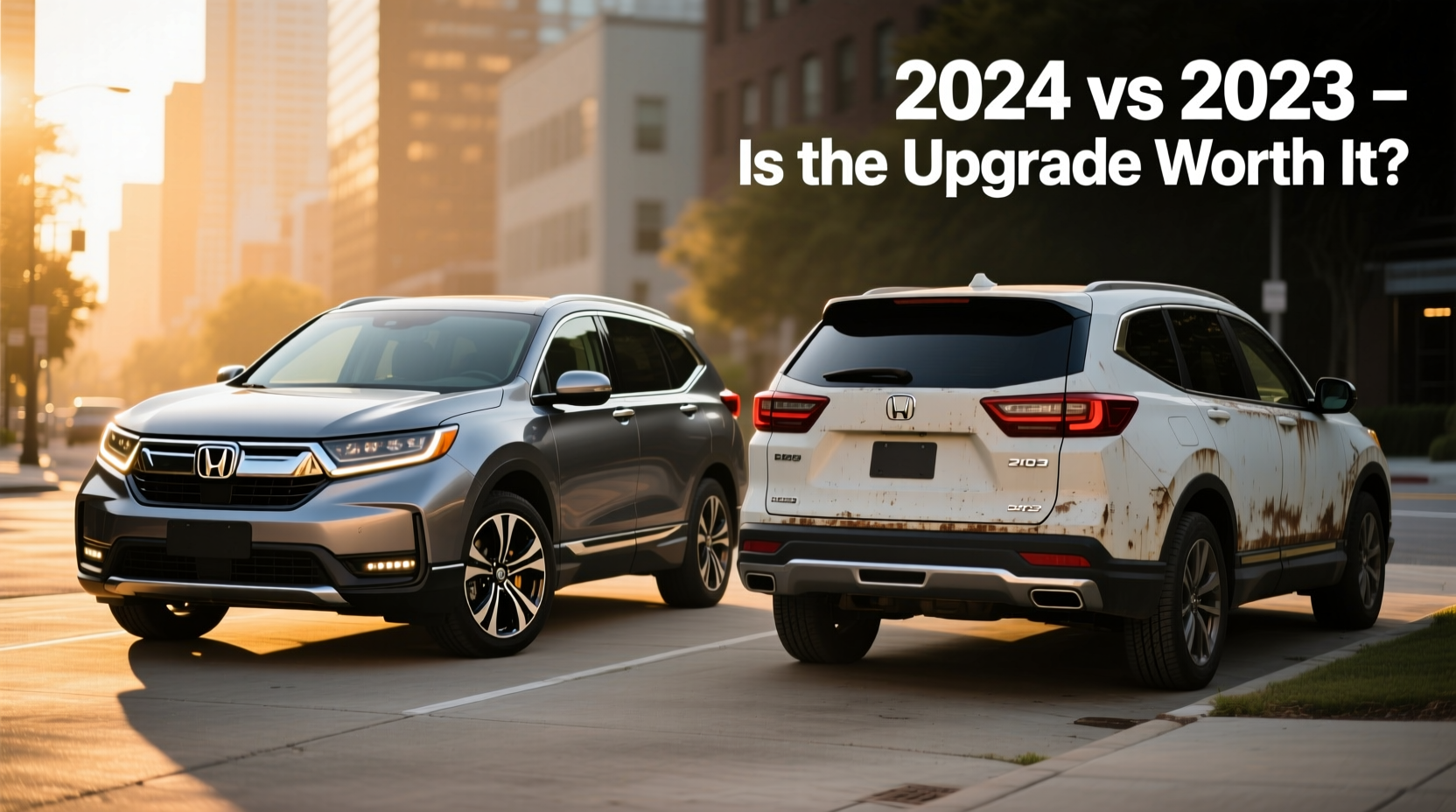
Externally, the 2024 Honda Pilot received a noticeable facelift compared to the 2023 model. The most prominent change is the redesigned front fascia, which now features a bolder grille, slimmer LED headlights, and a more aggressive lower air intake. These tweaks give the 2024 model a more modern and upscale appearance, aligning it with Honda’s latest design language seen on the CR-V and Passport.
Rear styling also saw minor refinements, including updated taillight graphics and revised badging placement. While not revolutionary, the aesthetic evolution makes the 2024 stand out as fresher and more refined — particularly in higher trims like the TrailSport and Elite.
One practical improvement is the addition of standard LED fog lights across more trims in 2024, enhancing visibility in poor weather conditions. Wheel designs have also been refreshed, with available 20-inch alloys offering a more contemporary look.
Tip: If curb appeal and modern styling matter for resale value, the 2024’s updated front end gives it a clear edge over the 2023.Interior and Technology Upgrades
The most significant leap from 2023 to 2024 lies inside the cabin. Honda upgraded the infotainment system across all trims, replacing the older 7-inch touchscreen with a standard 9-inch unit powered by Google built-in. This brings seamless integration of Google Assistant, Google Maps, and Google Play Store — eliminating the need for smartphone mirroring via Apple CarPlay or Android Auto (though wireless versions are still supported).
The new system boots faster, offers over-the-air updates, and provides more intuitive voice commands. For families constantly navigating carpools or road trips, the improved navigation accuracy and real-time traffic routing are tangible benefits.
Additional interior enhancements include:
- Standard wireless charging pad on EX-L and above (previously wired only)
- Available 12.3-inch digital instrument cluster (up from 7 inches)
- Enhanced sound insulation in upper trims for a quieter ride
- New ambient lighting options in Touring and Elite trims
“Honda’s shift to Google built-in represents a major step forward in usability and connectivity. It's not just a screen upgrade — it's a smarter vehicle.” — David Lin, Automotive Tech Analyst at CarInsight Weekly
Performance and Drivetrain Consistency
Mechanically, both the 2023 and 2024 Honda Pilots share the same powertrain: a 3.5-liter V6 engine producing 285 horsepower and 262 lb-ft of torque, paired with a 9-speed automatic transmission. All-wheel drive remains optional on lower trims and standard on TrailSport, Touring, and Elite.
However, Honda fine-tuned the transmission calibration in the 2024 model for smoother shifts, especially under light acceleration. Drivers report fewer instances of hesitation when merging or climbing hills. The adaptive dampers on the TrailSport trim also received software updates, improving off-road responsiveness without sacrificing on-road comfort.
Fuel economy remains nearly identical — EPA estimates are 19 mpg city / 26 mpg highway for AWD models, and 20/27 for FWD variants. No significant gains were made here, but the consistency ensures predictable running costs.
Trim-Level Comparison: What’s New Where It Matters
Honda restructured the trim lineup slightly for 2024, making certain features more accessible. Here's a side-by-side overview of key differences:
| Feature | 2023 Honda Pilot | 2024 Honda Pilot |
|---|---|---|
| Base MSRP (LX Trim) | $38,290 | $39,190 |
| Infotainment Screen Size | 7-inch (standard) | 9-inch (standard), Google built-in |
| Wireless Apple CarPlay/Android Auto | EX and above | Standard on all trims |
| Digital Instrument Cluster | 7-inch (Touring and Elite) | 12.3-inch (Touring and Elite) |
| Wireless Charging | Available on Touring/Elite | Standard on EX-L and above |
| Advanced Safety (Honda Sensing) | Standard | Updated sensors; improved low-speed braking |
| TrailSport Off-Road Features | Limited-slip rear diff, skid plates | Same hardware, enhanced tuning |
The price increase averages around $900–$1,200 depending on trim, primarily driven by the tech upgrades. For buyers focused on value, finding a late-model 2023 with the Tech Package may offer similar functionality at a lower cost — though without Google integration.
Real-World Example: Sarah’s Family SUV Decision
Sarah Thompson, a mother of three from Colorado Springs, faced this exact choice last fall. Her 2017 Pilot needed replacing, and she was torn between a lightly used 2023 Touring with 12,000 miles priced at $44,500 and a new 2024 Touring listed at $48,200.
After test-driving both, she noted the 2024’s quieter cabin and superior voice command accuracy during a simulated school-run route. She also appreciated the larger digital gauge display, which made checking tire pressure and navigation easier at a glance.
Ultimately, Sarah chose the 2024 despite the higher price. “The extra $3,700 felt steep,” she said, “but knowing I’ll keep this car for at least eight years, the longer software support and better tech future-proofed my investment.”
Step-by-Step Guide: Should You Upgrade?
If you're deciding between the two models, follow this logical evaluation process:
- Assess your current needs: Are you replacing an older SUV immediately, or can you wait?
- Test-drive both models: Sit in each, use the infotainment, try voice commands, and evaluate ride comfort.
- Compare local inventory: Check dealer lots and certified pre-owned listings for 2023 models with desirable options.
- Calculate total cost of ownership: Factor in depreciation, fuel, insurance, and expected maintenance over 5+ years.
- Evaluate tech importance: If seamless navigation and smart features matter daily, lean toward 2024.
- Negotiate aggressively: Use the 2023 model as leverage when pricing a 2024 — dealers often offer incentives to move older stock.
FAQ
Is the 2024 Honda Pilot significantly more reliable than the 2023?
No major reliability differences exist between the two model years. Both share the same proven V6 engine and transmission. The 2024 benefits from minor software refinements, but long-term dependability expectations remain equal.
Can I get Google built-in on a 2023 Honda Pilot?
No. The Google built-in system is exclusive to 2024 and later models. While the 2023 supports wireless smartphone mirroring, it lacks native app integration and over-the-air updates.
Is the TrailSport trim worth it for non-off-road drivers?
Yes. Even if you never leave paved roads, the TrailSport offers standard AWD, upgraded suspension, unique styling, and increased ground clearance — all contributing to a more confident driving experience in snow or rain.
Conclusion: Making the Right Choice for Your Lifestyle
The 2024 Honda Pilot isn’t a revolutionary overhaul, but it is a meaningful evolution. The jump in infotainment capability, interior refinement, and subtle performance tuning make it feel like a more modern vehicle — especially valuable for tech-savvy families or those planning long ownership periods.
That said, the 2023 model remains an excellent choice, particularly if found at a discounted CPO price. With nearly identical performance and safety, it delivers 90% of the experience for potentially 15–20% less upfront cost.
💬 Have you driven both models? Share your thoughts below. Help fellow buyers decide whether the 2024 update is worth the premium — or if the 2023 still holds its ground.








